Meet the Soul of Manhattan Kayak
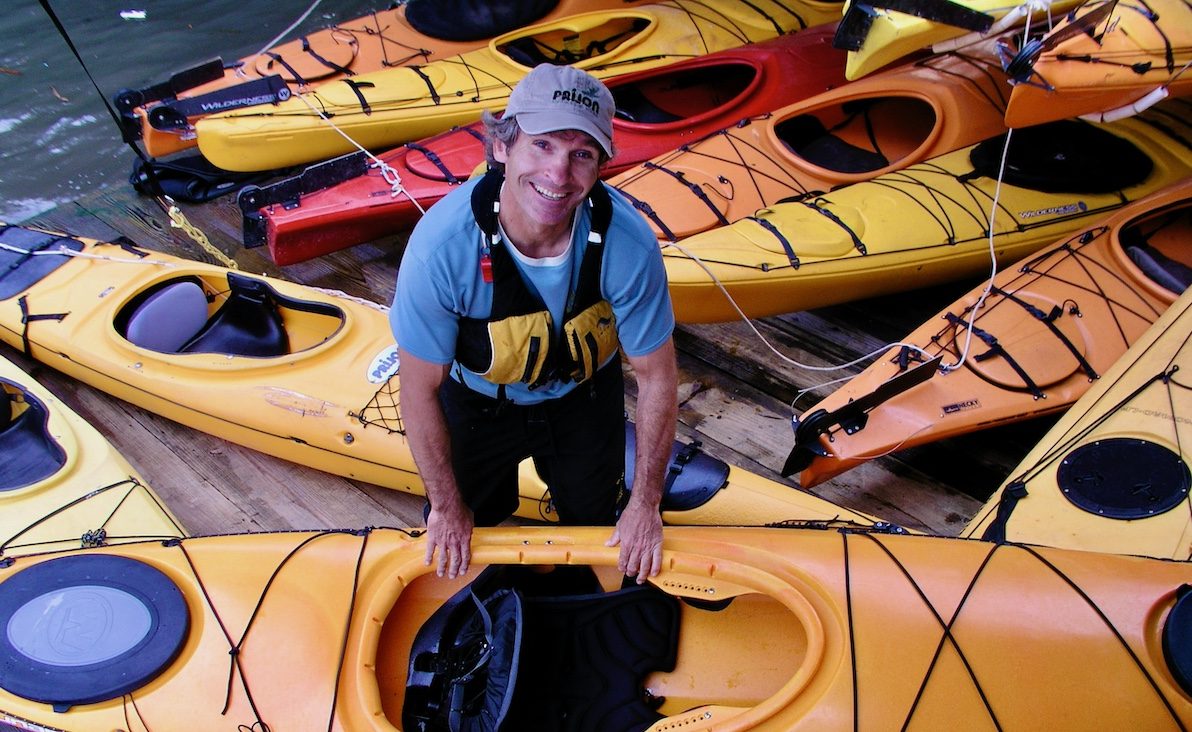
When I founded Manhattan Kayak, I was a purist. I believed the only way to truly experience the Hudson was in a sleek, sit-in kayak that hugged the body like a ski boot—making the boat an extension of my nervous system. To me, the efficiency of a two-bladed paddle was objectively superior to its single-bladed ‘canoeing cousins,’ especially in the dynamic chop of NYC. For years, the low center of gravity and minimal windage of a kayak seemed to prove my point every single day.
The Best Way To Get Around NYC
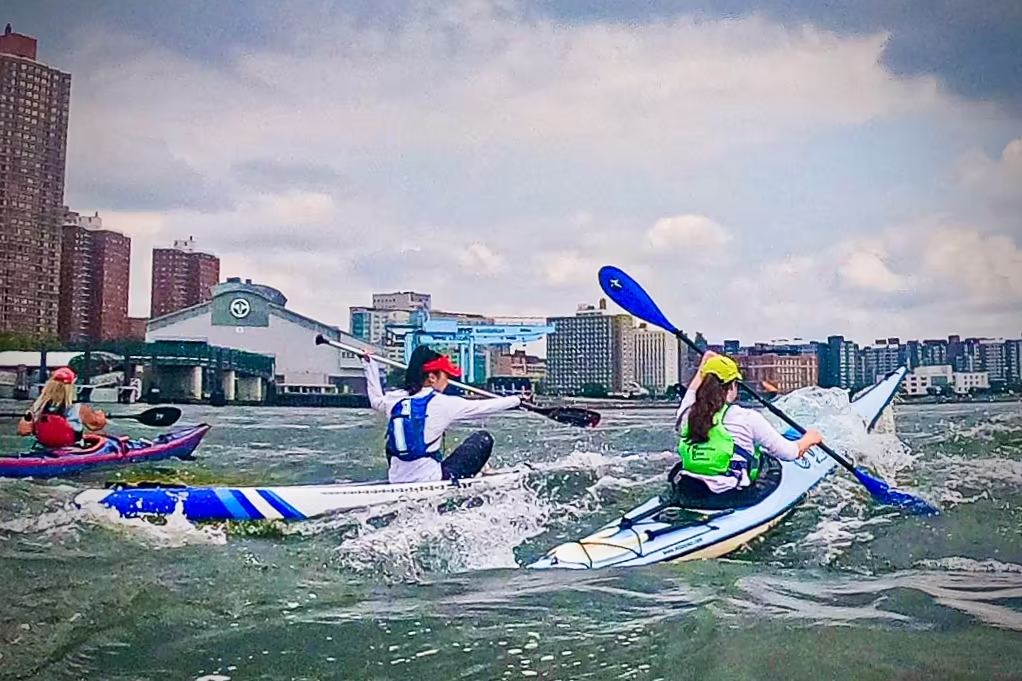
We take absolute beginners to a Manhattan Circumnavigation in one season, with a diet of classes and guided river trips. Varying conditions mean new paddlers learn something new every time they get on the water. As their skills and endurance increased, we go further and further. After kayaking 15 mile round trip to the Statue of Liberty, kayakers are just a step away from going all the way around Manhattan Island.
Bold students would give it a go in the same season they started, while prudent students would wait until the following year. Many of these early kayak students are now super-capable paddlers who store their vessels in the boathouse and paddle all over the world. That was, and is, the basic blueprint to paddling success in touring kayaks and sea kayaks. Surely, the kayak itself deserved half the credit?
Why We Kayak and Don’t Canoe in NYC
Adirondack-style canoes fit on streams and tributaries, but are totally out of their element on open NYC waters like the Hudson River or East River. And even on the larger lakes in the Adirondacks, newer canoeist are in for a rude awakening during windy days. The last single hull canoeist we’ve seen on the Hudson River had to be rescued by the Coast Guard, and he’d paddled all the way from Oregon, but couldn’t handle the Hudson. Why rescued? Because while sea kayaks and paddleboards sit low in the water, canoes have a huge mass above water on all sides. It was windy–there’s often a sea breeze from the Atlantic Ocean–the skilled canoeist couldn’t move forward. He had too much resistance against on his sides. What we’ve learned: we use closed-deck kayaks even when we explore the wilderness.
The Hawaii Effect
Much of my kayak bias came from my father, Dieter Stiller, who grew up and paddled kayaks in Europe and then imported kayaks to the USA from 1959-1995. I worked with him in the Klepper shop on Union Square during summers, and then full time after college until I founded MKC in 1996. It was always so exciting to see the latest and greatest kayak models arrive and to unbox them. So elegant in design and purpose. Sleek and sophisticated. Grumman, Coleman, and even Old Town Canoes stepped aside for the new paddling kids on the block.
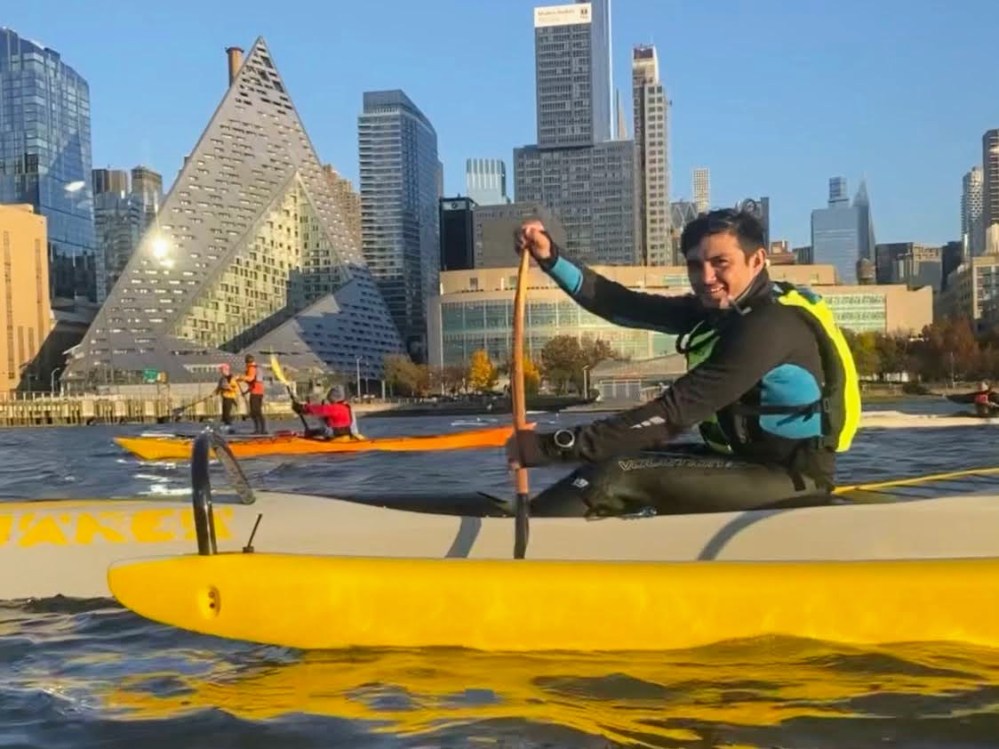
By 1998, a wonderful volunteer and eventual MKC partner, Abigail Kinney, connected me to the Frying Pan Barge at Pier 63. She was outrigger canoeing there and she thought that the Frying Plan proprietor, the beloved John Krevey, would want more paddle sports at his location. We moved there and I was sharing a dock with the New York Outrigger Club.
I watched as their 400 lb, 6-person vessels ply New Yorkers waters with ease. Then, I witnessed the much smaller and super sleek two-person outrigger canoe (OC-2) and one-person outrigger canoe (OC-1) flying along. Each year, an annual Outrigger Race around the Statue of Liberty led to a luau for all to enjoy. These “canoes” seemed quite at home in NYC.
It was still a different tribe though and we loved our kayaks. Nevertheless, as time went on, many of the canoeists were very pleasant and joyful people having a blast on NYC’s waters just like us. Most of them conveyed the Hawaiian “Aloha” spirit which was most welcome. However, there was very little overlap between the two tribes of enthusiasts until the rise in popularity of two vessels: the Surfski and the SUP.
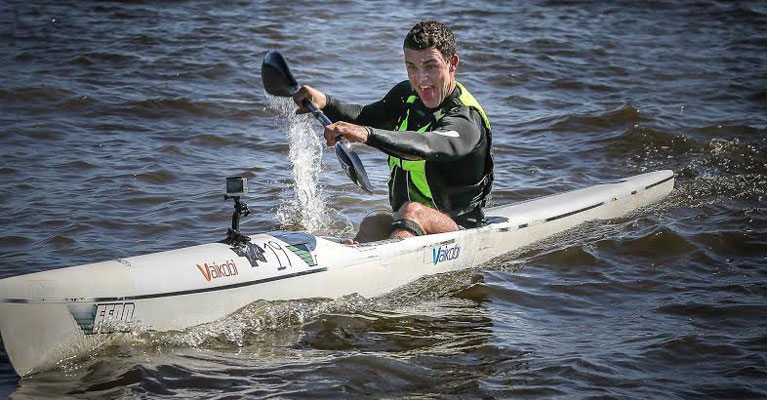
Surfski for Ultimate Speed
The Surfski, born in similar ocean waters as the outrigger canoe, seemed to appeal to a few of the canoeists because it was sleek and even faster. Myself and many MKC kayakers added the surfskis to our quiver of vessels and skill sets. Soon, kayakers, outriggers and surfskiers were racing around Manhattan Island in the legendary Mayor’s Cup race and having a fantastic time.
The bridge to all NYC paddlers was getting stronger. I particularly remember a top outrigger paddler named Dorian Walter, formerly a German whitewater slalom kayak racer, who embraced the surfski and never looked back. Years later he would win the 40-45 year old age class at the World Surf Ski Championships in Dubai.
The late and great Joe Glickman, who paddled his ski prolifically, including the famous Molakai Race, helped clarify the translation. He and former MKC manager, Ray Fusco, were instrumental in getting many top surfski paddlers from all over the world to race in NYC. Australia, South Africa, Tahiti and Hawaii representing their skills in NYC a couple times a year. Surfskis were now firmly imprinted into MKC’s and NYC’s DNA.
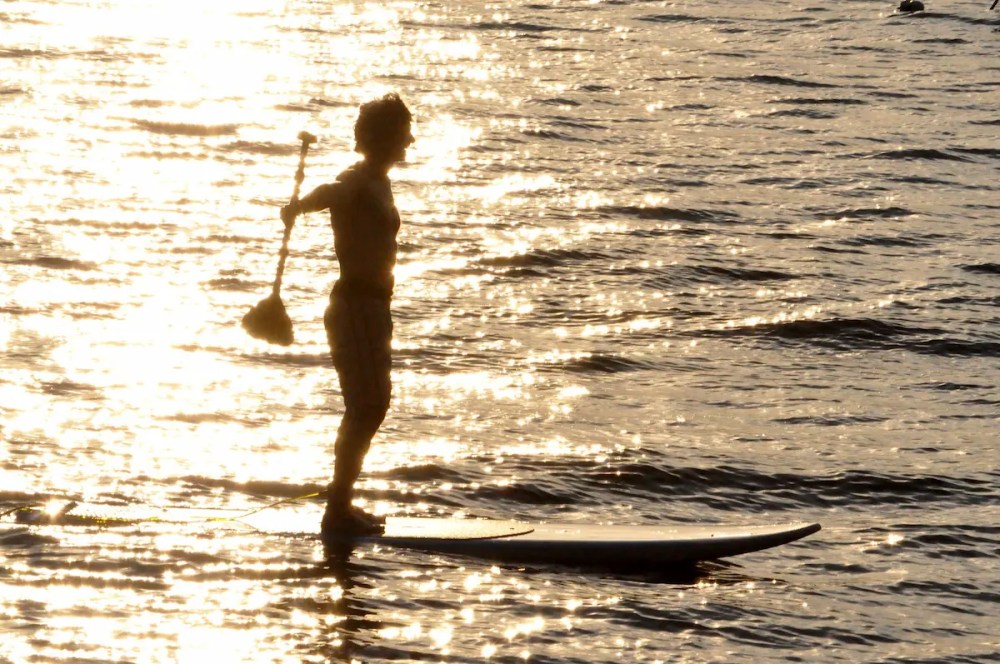
Stand-Up Paddleboards Arrive
Just as the surfski had captured the hearts, minds and bodies of many MKC staff and paddlers, a tall, tan Hawaiian named Simon came knocking on our door for employment after working with Kayaks Kauai Outbound. This firm that was founded by a Micco and Chino Godinez. My father had even helped outfit them for an epic British Columbia expedition early in their paddling careers.
Simon spoke the gospel of SUP, and suggested we get a few. So I thought: “A surfboard that can be paddled, that would be awesome!” In a month, we had three C-4 Waterman SUPs and it was love at first sight, but surely, while great fun to play on, not suitable for covering distance at good speed in NYC’s waters. Or had we just not learned the skills yet?
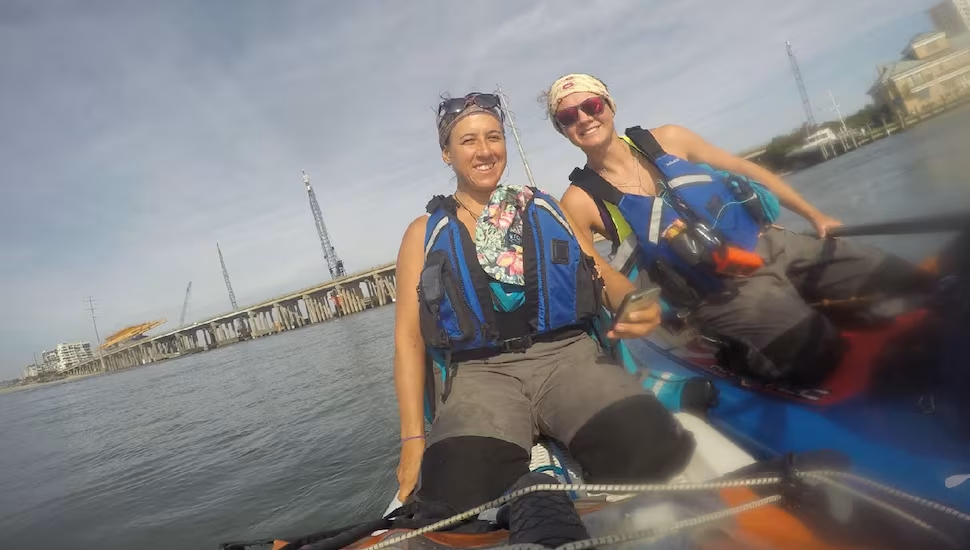
The Atlantic SUPer Girls
In 2017, a man named Chris Bertish crossed the Atlantic Ocean via SUP. Meanwhile Aleksander Doba, a 70+ year old Polish man crossed it for a third time in a kayak. Granted, both vessels are not exactly stock issue paddling craft, but the bar was set. SUP’s do long distance big time.
Before these heroics, I had already started going further and further on our SUPs. I realized that a well designed 12’6 to 14 foot SUP with good technique could do nearly anything we could do with our kayaks and skis, just not quite as fast. There was also limitations going into the wind. I proved to myself that it was true by finishing the 25-mile Sea Paddle Race around Manhattan in good time…well under 5 hours.
MKC staff veterans started to embrace the SUPs more and more. Finally, the multi-skilled former MKC manager, Julieta Gismondi, decided to do a solo SUP trip around Long Island. She did the nearly 250 miles in 11 days and set the stage for her and her partner Louanne Harris, to paddle from NYC to Miami in 4 months on 12’6 Bic Wing SUP’s.
We were now teaching hundreds of people to SUP and to progress from zero to Manhattan Circumnavigation in about two seasons. A dozen MKC clients now race in the Sea Paddle and SUP is officially in MKC and NYC’s DNA. It all begins with SUP 1-2-3!
Moreover, using a single-bladed paddle greatly expanded our appreciation for it. Paddleboarders started outrigger canoeing more, outriggers started SUPing more. I’ve rented Adirondack-style canoes on vacation and really enjoy using the single bladed paddled to explore lakes upstate and even in Oregon. Just watch out for wind on those single hull canoes!
And hey, the world-famous freestyle kayaker EJ Jackson, who taught me modern whitewater kayaking, has a son, Dane Jackson, who has has been world champion in both freestyle kayak and canoe. He’s also world class in Freestyle SUP. Spencer Lacy, grandson of a Colorado man named Joe Lacy, who helped my dad get a paddle-hold in this country, is one of the most prolific whitewater SUP athletes there has been. Paddleboarders are now routinely running whitewater rivers worldwide.
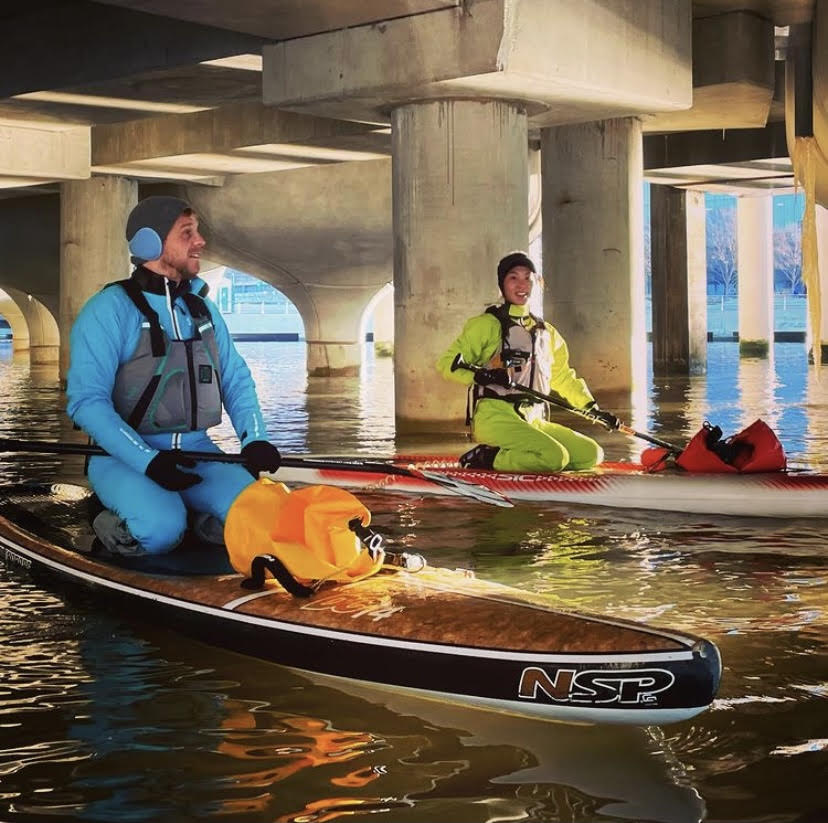
SUPs Love To Surf
This is a back-to-SUP origin story: It was Laird Hamilton, David Kalama, and other Hawaiian watermen who belonged to the “too short crew” who popularized the SUP around 1998. They were having a bad wave day for regular surfing and decided to use some long boards and outrigger canoe paddles and have a laugh. Soon, they found themselves catching all sorts of waves and having fun.
They went back to their workshops and started developing better boards. There was a challenge in making robust paddles that were 6-7 feet long that didn’t snap like toothpicks. Within a few years, that nascent industry sorted it out and never looked back. I highly recommend the book The Art of Stand Up Padding by Ben Marcus to get an in-depth view on it all.
MKC enjoys our version of “downwind” SUP surfing when we get strong sea breezes that come upriver from the south, meeting the ebb current. In NYC, an ebb current flows from north to south as freshwater from the Hudson Valley empties toward the Atlantic Ocean. In mid-river, sizable waves form so we can even surf upstream! We can SUP on surfable beaches like the Rockaways or Ditch Plains in Montauk and really love it.
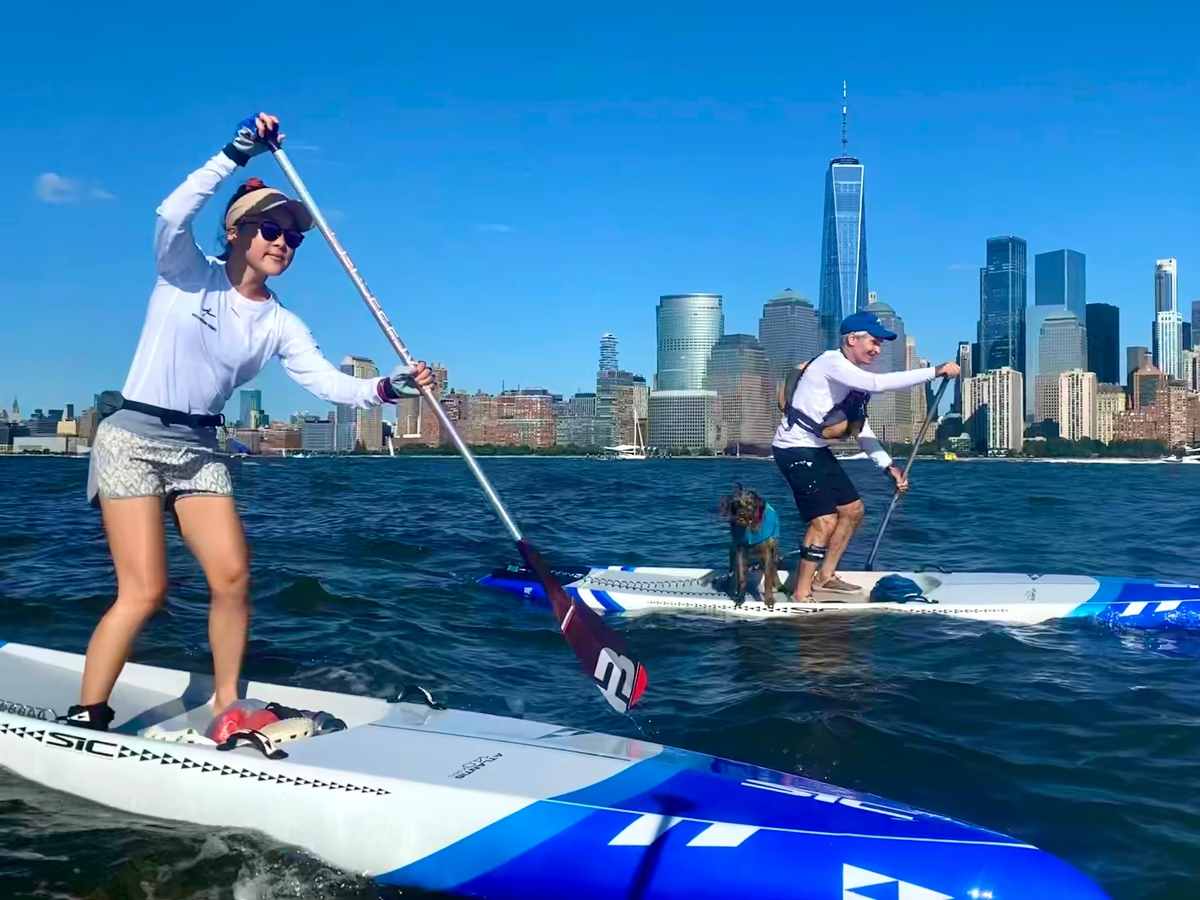
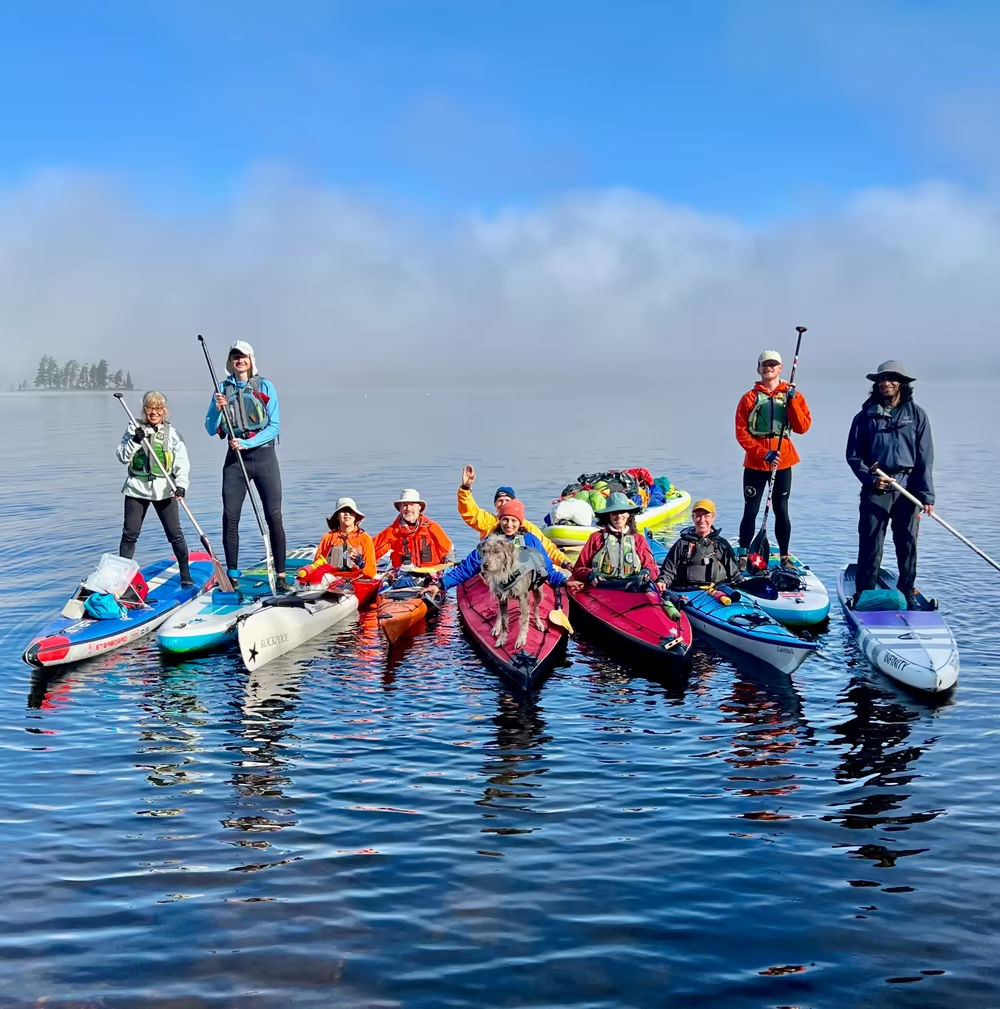
MKC discovered that many of our SUP students also take our Kayak Basics 1-2-3 classes and learn to kayak. Then, they can do longer distances sooner. They build up their SUP endurance during calmer days and eventually circumnavigate Manhattan on a sea kayak, paddleboard, or surfski. Hence, a new species of MKC paddler that is a tripaddler. They can pick, choose, and use the vessel and paddle that serves them best for the day! This diversity makes Manhattan Kayak Co endlessly rewarding.
We have a full menu of wonderful trips that are excellent experiences all on their own. However, we recommend a progression to achieve the crown jewel: the Manhattan Circumnavigation.
– Eric Stiller, Manhattan Kayak Co