Paddling Form and Function
Best For
- Fitness enthusiasts looking for functional movement training
- Gym-goers seeking outdoor cross-training
- Runners and cyclists wanting low-impact conditioning
- Adults interested in lifelong fitness and wellness
- Anyone curious about the connection between movement, nature, and performance
The Quick Skim
For decades, New Yorkers have searched for better ways to stay fit.
Some find it in gyms. Others in studios, running clubs, cycling groups, yoga classes, or endurance sports.
Paddling offers something unique: the opportunity to apply strength, balance, coordination, and cardiovascular fitness in a dynamic outdoor environment.
Train for Life
Years ago, while training alongside New York fitness innovators such as Radu Teodorescu, I learned that lasting fitness isn’t just about building muscles—it’s about building movement.
Good movement means learning how the legs, hips, core, and upper body work together as a coordinated system.
Why the Water Is Different
Unlike a stationary machine, the water is always moving.
Every stroke requires subtle balance adjustments, core engagement, rotational power, and body awareness. The result is a form of exercise that can be both physically demanding and mentally restorative.
Gym + Water = A Powerful Combination
Paddling doesn’t replace strength training, running, cycling, or yoga.
It complements them.
Many paddlers use the gym to build strength and resilience, then take those abilities onto the water where fitness becomes skill, exploration, and adventure.
Whether your goal is wellness, performance, stress reduction, or simply spending more time outdoors, paddling offers a unique way to connect fitness with function.
Ready to experience it yourself? Explore our Technique Classes, Weeknight Training Club, and guided programs on the Hudson River.
Training at Home
From Coach Stiller’s Notebook
There’s a reason we keep coming back to the water. It’s long-term fun.
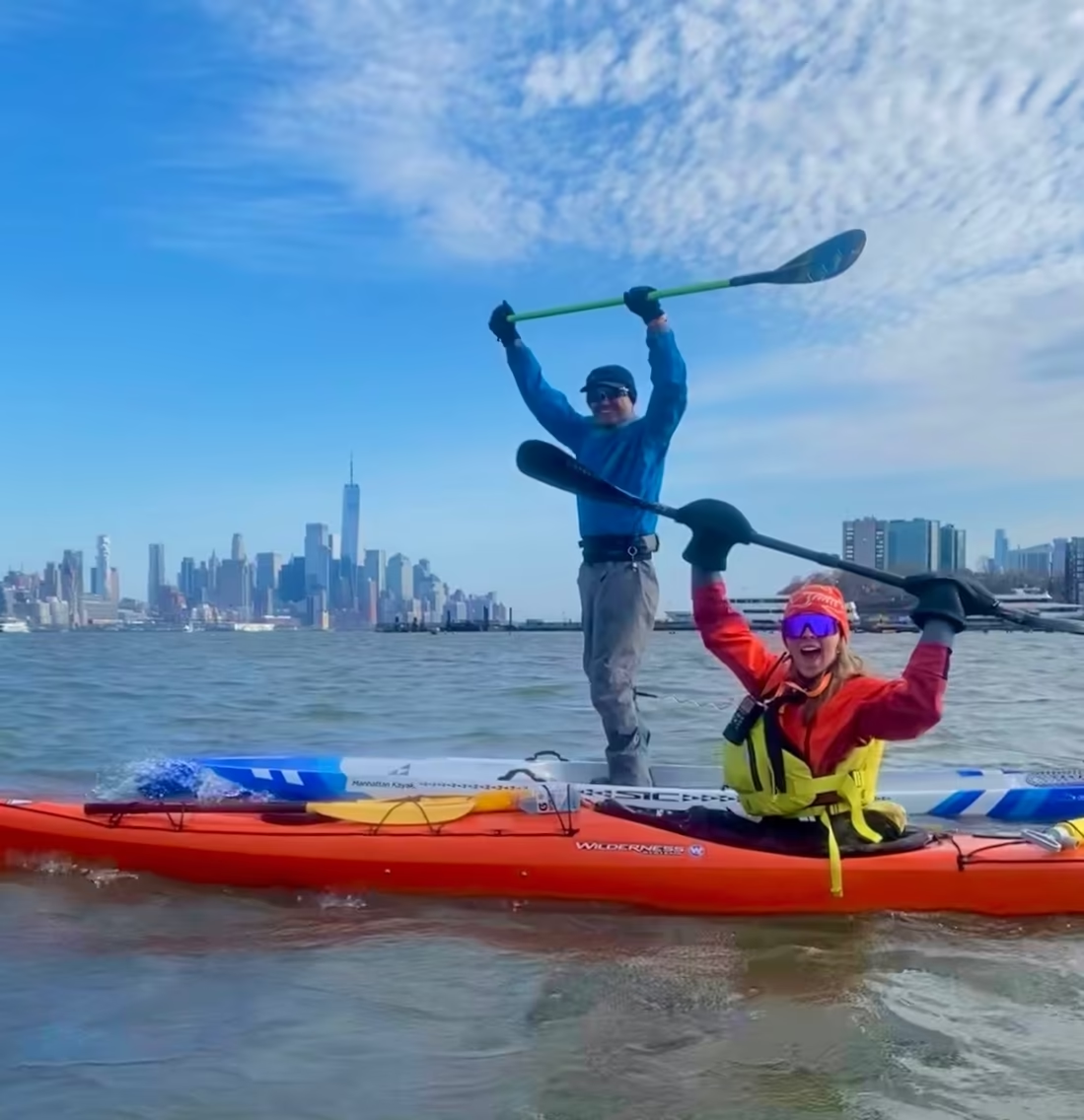
Out on the Hudson, the NY Harbor, or the East River, the views are drop dead amazing, especially when you’re still, floating, and full of vigor and excitement during a paddle trip. But we eschew sitting and watching like tourists. Instead, we love moving well and the workout of a day on the water.
Good kayaking and stand-up paddleboarding technique is about enjoyment, efficiency, and sustainability over time. When your movement improves, the experience improves and that’s what keeps people paddling for years.
That’s what I mean by long-term fun. In this blog, I’m going to show you how to learn and improve your kayak & SUP technique at home.
.
Form Over Distance
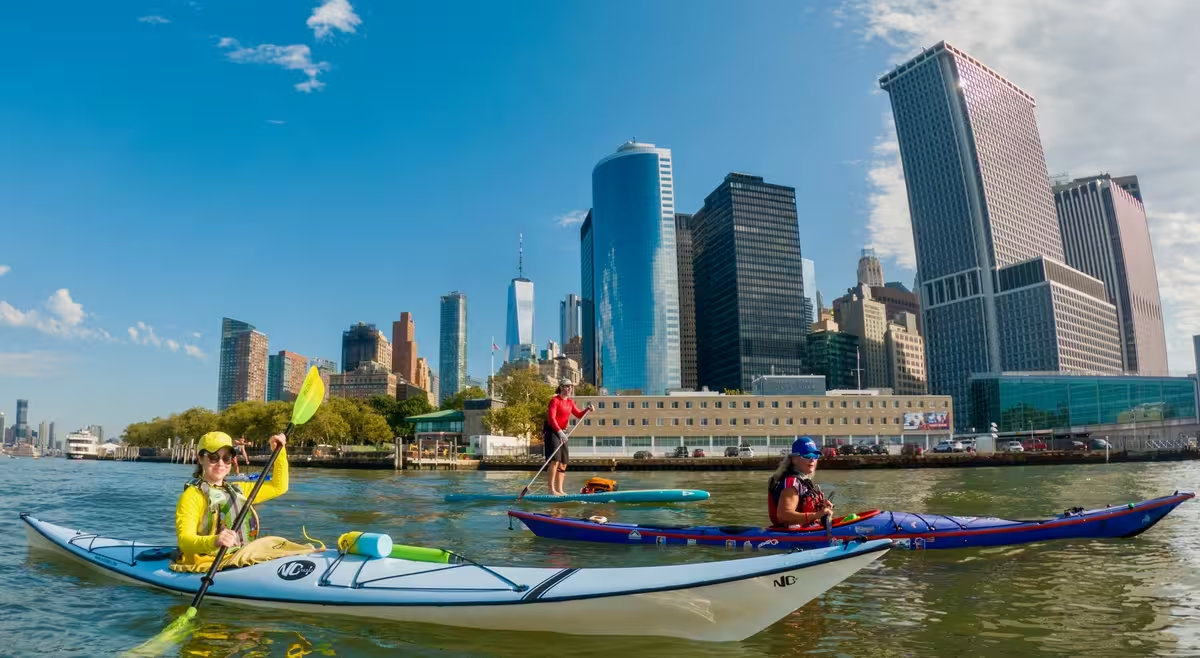
Practice isn’t just preparation—it’s the path itself. Each paddle stroke builds not just strength, but awareness, timing, and mastery that makes every trip more rewarding.
As Bruce Lee described:
“Before I studied the art, a punch was just a punch and a kick just a kick. When I studied the art, a punch was no longer a punch and a kick was no longer a kick. Now that I understand the art, a punch is just a punch and a kick is just a kick.”
Paddling follows the same arc.
At first, a stroke is just a stroke. Then it becomes complicated. And then—through the right kind of paddling technique practice—it becomes simple again, grounded in much deeper understanding.
Repetition vs. Refinement
Many paddlers log years on the water. Thousands of strokes. Miles and miles. But without a foundation in paddle stroke technique, there’s a ceiling. The body creates patterns that are only partially efficient:
- arms and shoulders taking over
- limited torso rotation
- weak connection from legs through the hips
In kayaking and SUP, one stroke follows the next with 50 to 60 strokes per minute. What you repeat becomes what you are. And over time, that shapes either efficiency or limitation.
.
The Foundation of Efficiency
It’s tempting to think in terms of distance: longer trips, more expertise. But there’s another way to approach it: Before distance, build the stroke. Before effort, build the connection. Efficient paddling comes from a clean catch, full-body coordination, and a controlled release. That leads to glide. When those elements are in place, paddling becomes smoother, lighter, and more enjoyable. That’s long-term fun in motion.
.
Know the Forward Stroke
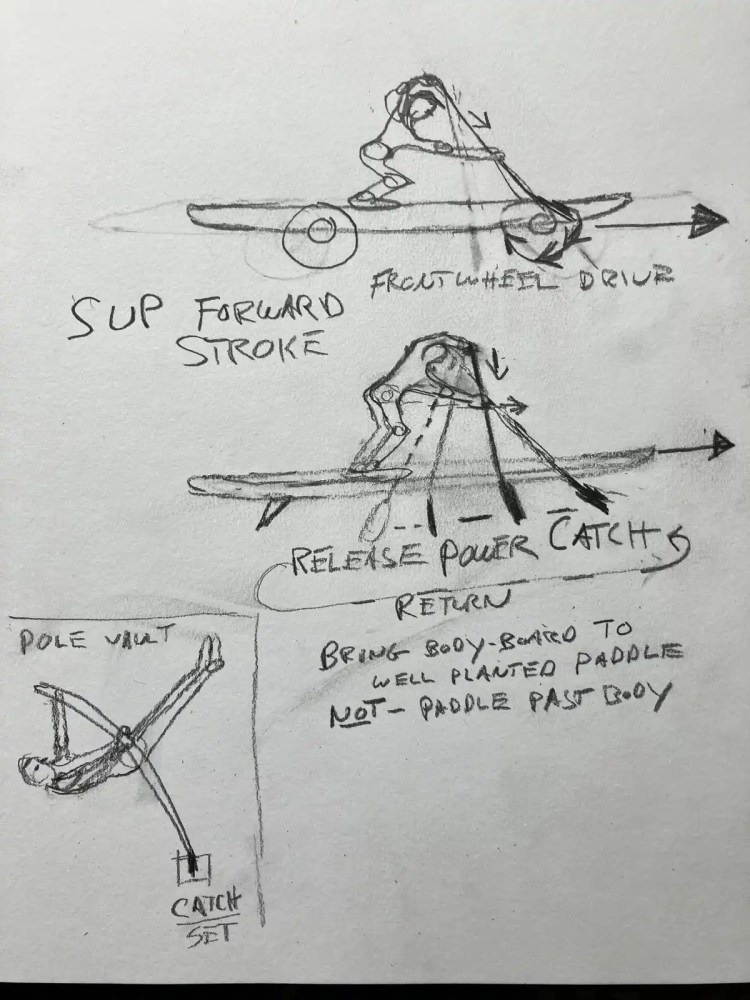
These sketches come straight from my 30 years of coaching. Simple drawings used to explain movement, connection, and feeling.
They’re meant to be useful and they’re purely originals without editing or filters. I recommend drawing them yourselves as well. Pencil to paper! It’s wonderful way to learn.
.
Front-Wheel Drive
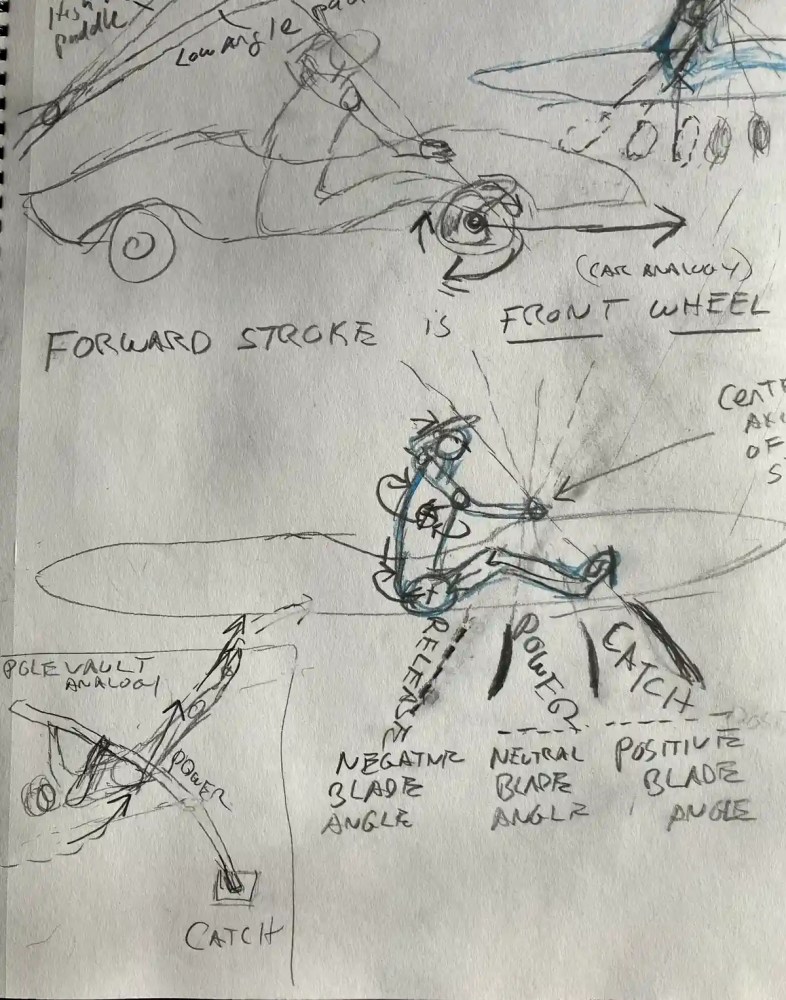
Think of the forward stroke as front-wheel drive. The connection happens out in front—at the catch—not by pulling from behind. Like a pole vaulter planting their pole, that moment of connection creates everything that follows.
Catch = connection where the paddle blade grabs and holds the water
Power phase = energy transfer through whole body
Release = paddle blade exits at the knee, and body rotation follows through
The technique is to connect at the water and move the whole body, not pulling with the arms. Good paddlers bring the boat or board to the well-planted paddle.
.
Get In Your Body
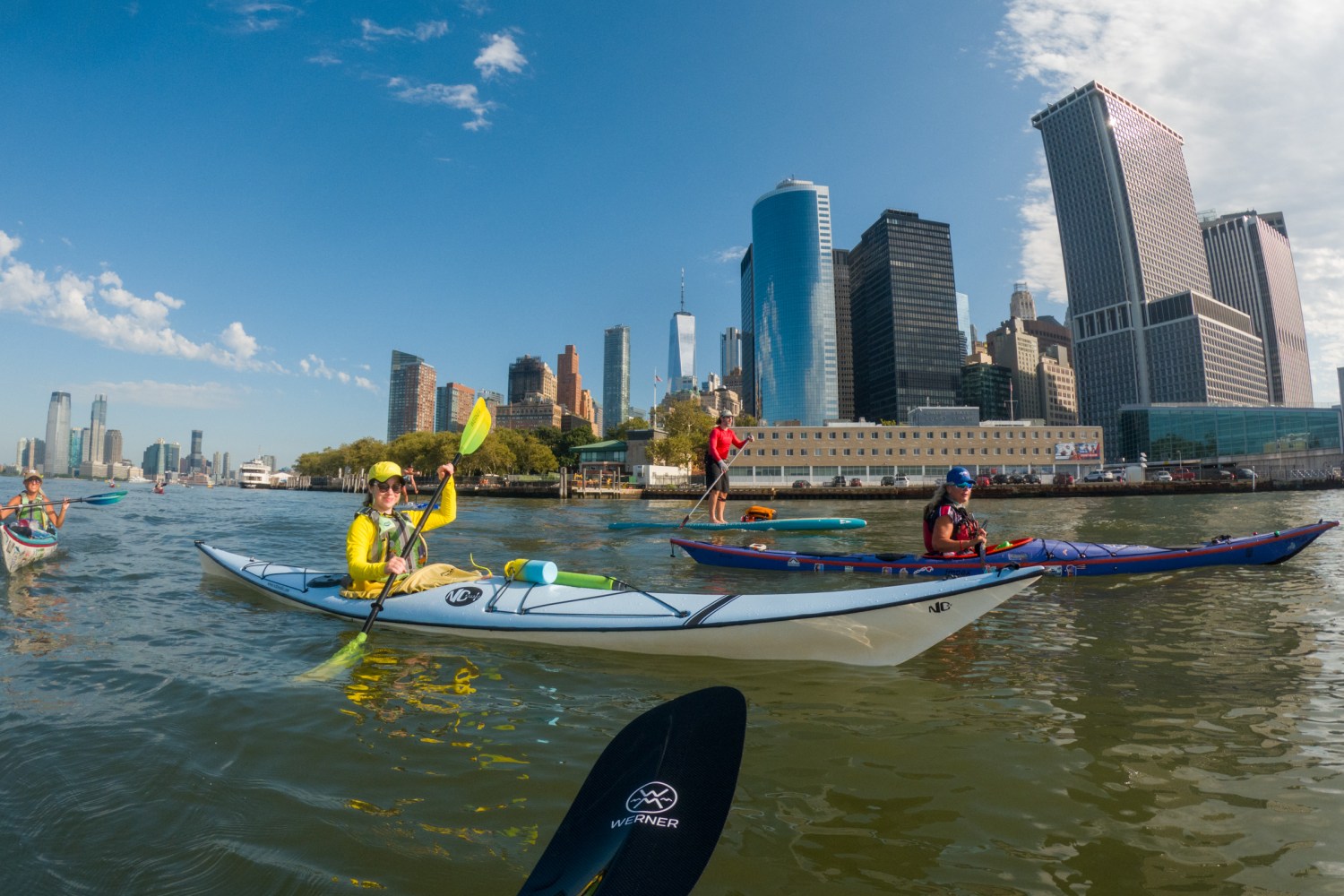
I’ve been asked: Where’s your favorite place to paddle?
Answer: It’s in the boat or on the board, while in my body. I’m present, connected, and searching for that rhythm where the paddle enters cleanly and the whole system moves me as one. The precision and feeling of the catch can only be truly found in the water, and good body mechanics and form should be practiced as often as possible.
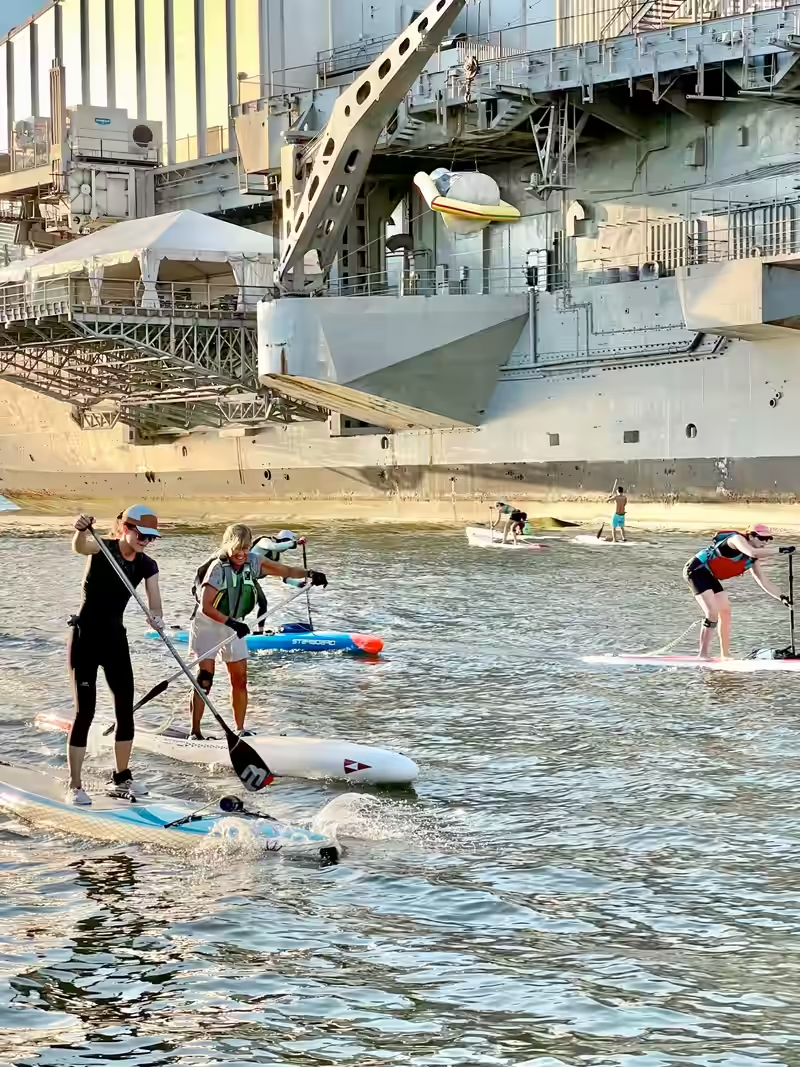
What is mastery without water? If you can’t get on the water enough to install the nervous system coordination how can you progress? There’s the concept of the 10,000 hours of practice to achieve mastery of a skill but that’s often misunderstood.
Bruce Lee said:
I fear not the man who has practices 10,000 kicks, but I fear the man who has practiced one kick 10,000 times.
This implies deliberate practice with awareness on the basics. Moreover, our strength, flexibility, and endurance can wax and wane. So, I have a solution that works for deliberate technique practice and maintenance.
.
At-Home Paddle Wand Basics for Kayak & SUP
You can learn proper kayak and stand-up paddleboard technique before the paddle even enters the water. I’m going to show you how to find:
- alignment
- rotation
- coordination
- full-body connection
At-Home Band Training for Kayak & SUP
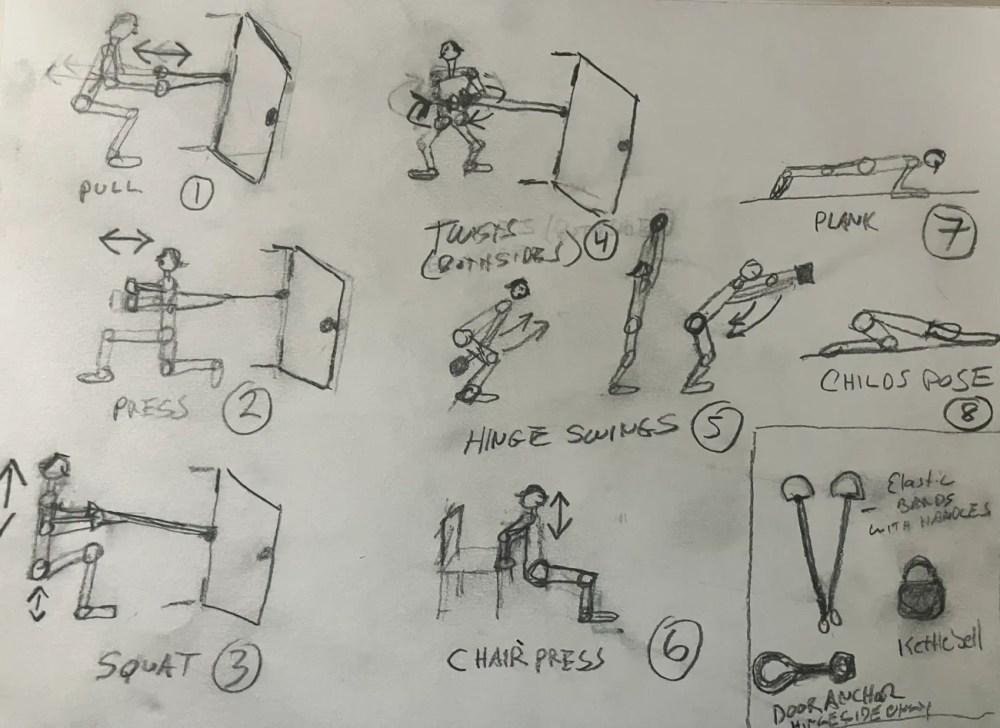
Simple resistance band exercises build the body that supports paddling — strength, connection, and control across the whole system.
A note before you start: If you haven’t exercised in a while, check with your doctor first. When you’re ready, start light. Good form on 10 reps beats sloppy form on 30, every time.
Keep your back straight, core engaged, and don’t let the bands snap back — slow returns are where the work happens. Breathe steadily throughout. Don’t skip Child’s Pose. It’s the Yin in all the Yang.
Once these feel natural, moving from one exercise to the next with minimal rest creates a Giant Set. This is a full-body blast in under 20 minutes. Start with 1 round. Build from there.
1–3 rounds depending on time.
.
1. Pull (Back & Connection)
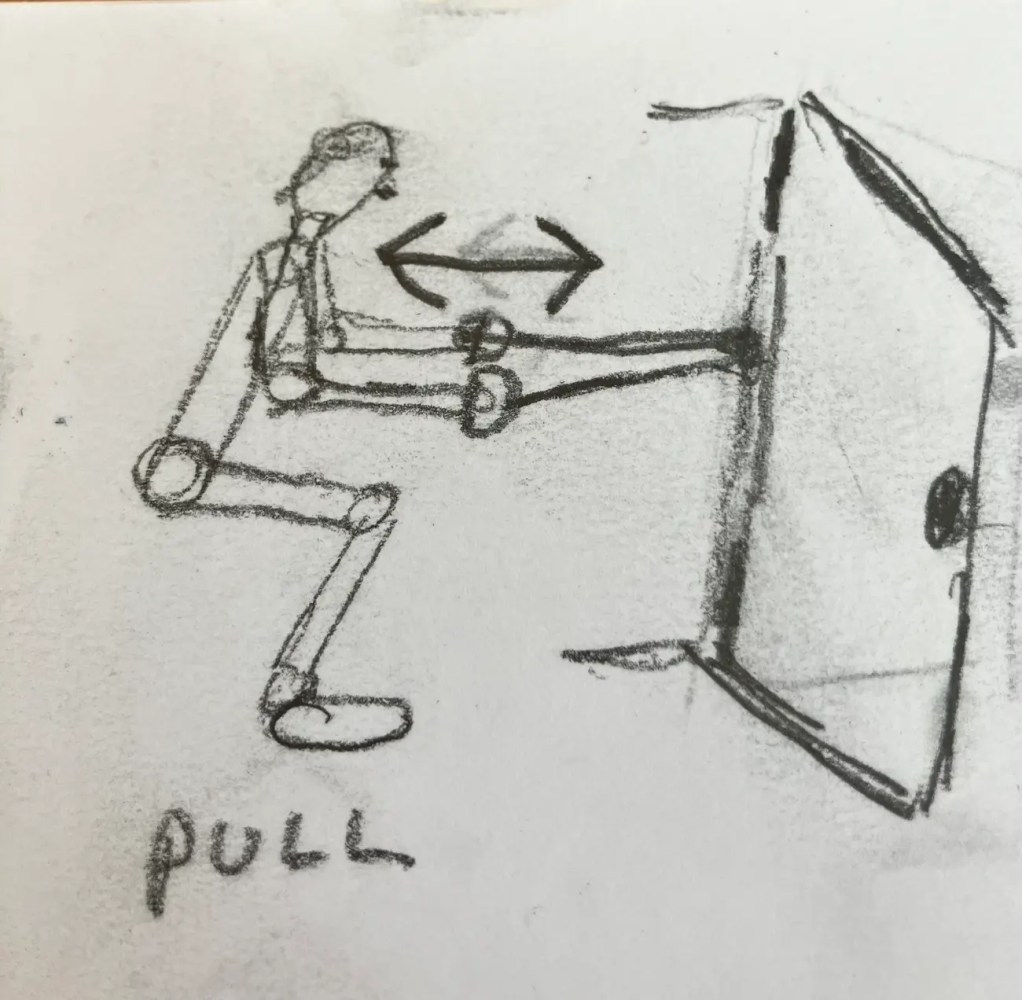
- Strengthens back and lats
- Reinforces connection from arms through torso
- Engage your core. Step further away for more resistance.
.
2. Press (Forward Strength)
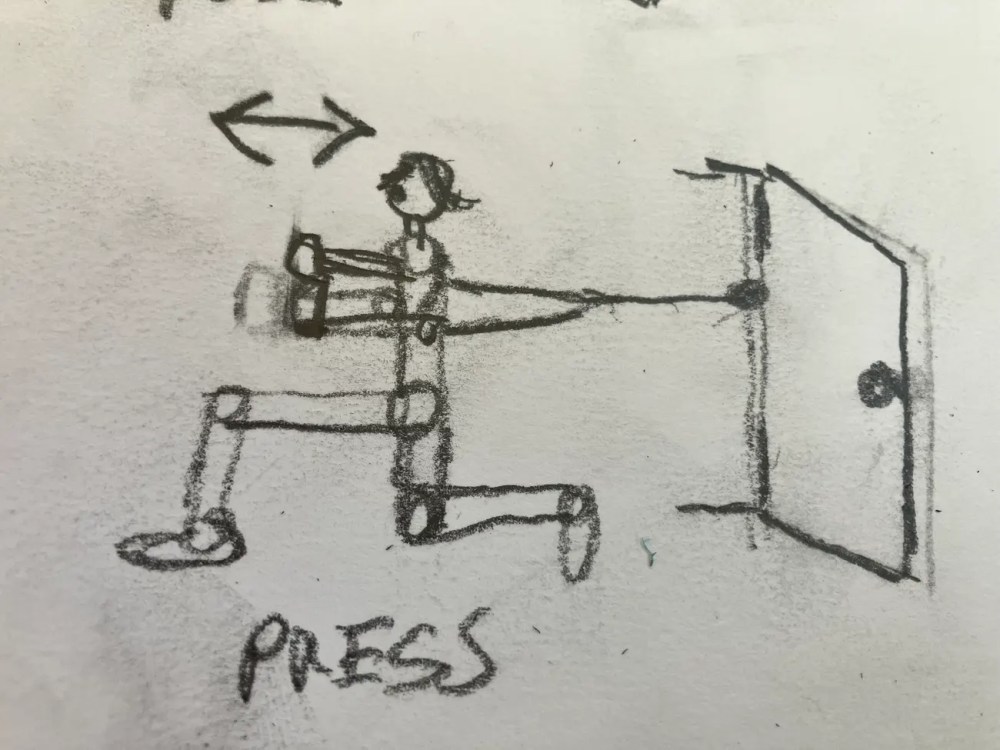
- Builds chest and shoulder strength
- Supports forward drive and stability
- Keep the body connected—don’t let the arms take over
.
3. Squat (Leg Drive)
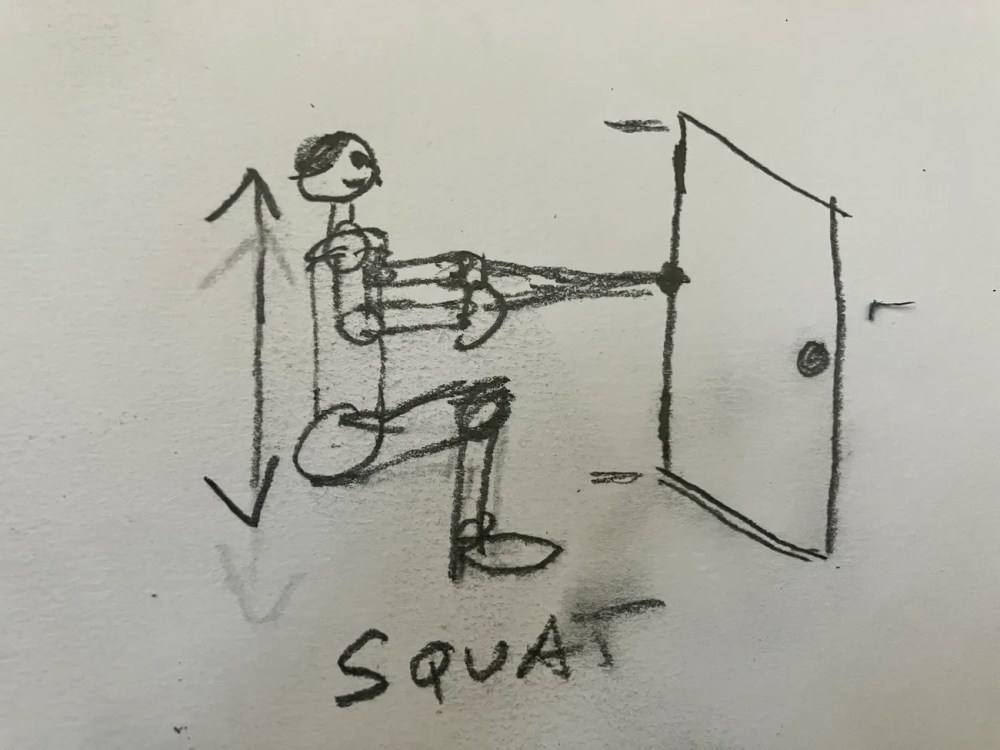
- Develops butt/leg/core strength and endurance
- Supports the base of the stroke
- Stay balanced and controlled
.
4. Rotation (Torso Connection)
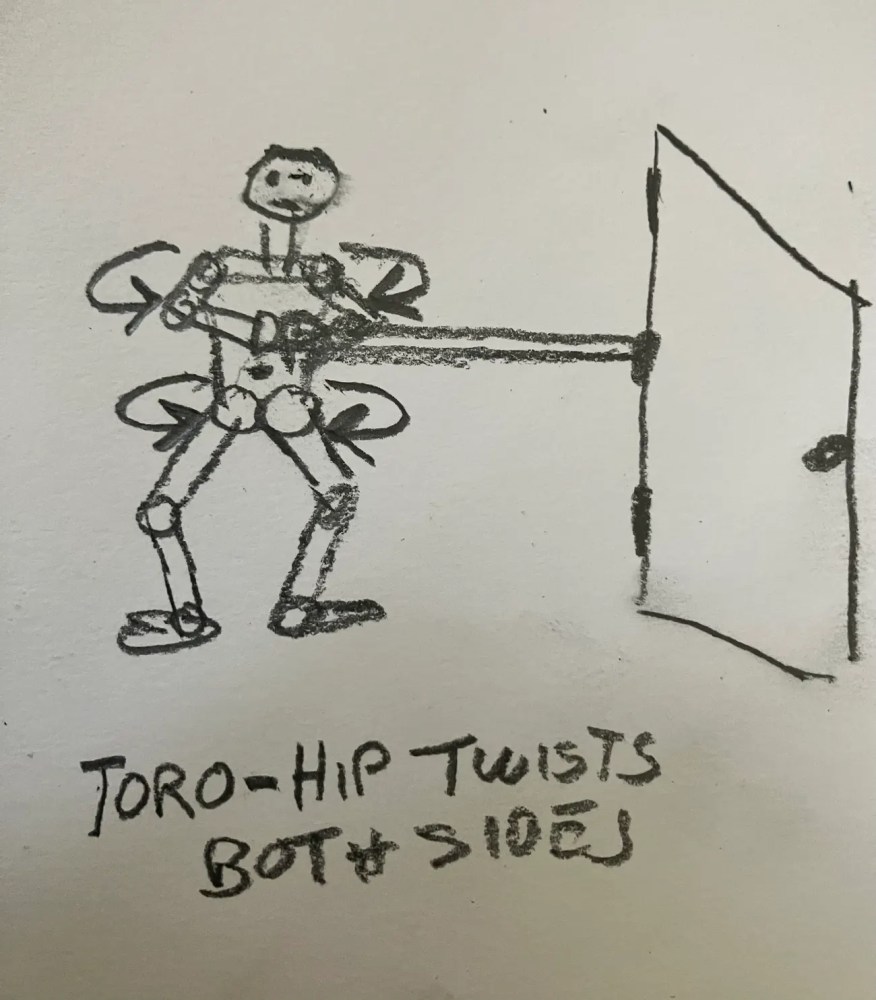
- Builds core engagement
- Connects hips, torso, and shoulders
- Rotate as one unit—not in pieces
.
5. Hinge / Swing (Hip Power)
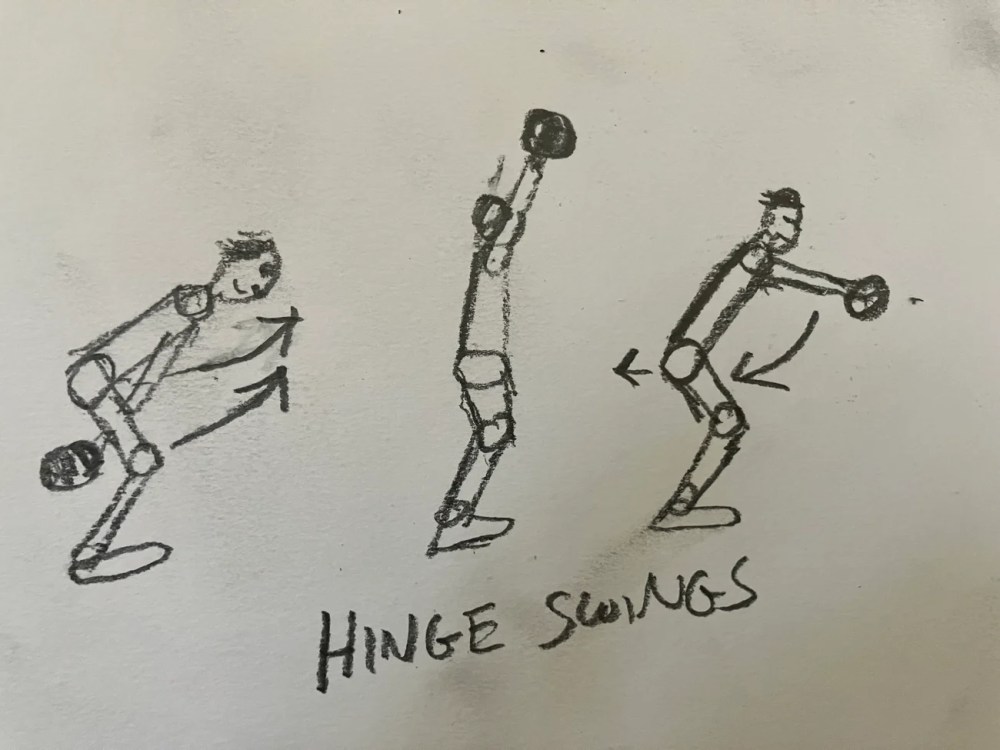
- Develops hip drive
- Supports power generation
- Think: fluid, not forced
.
6. Chair Press (Support Strength)
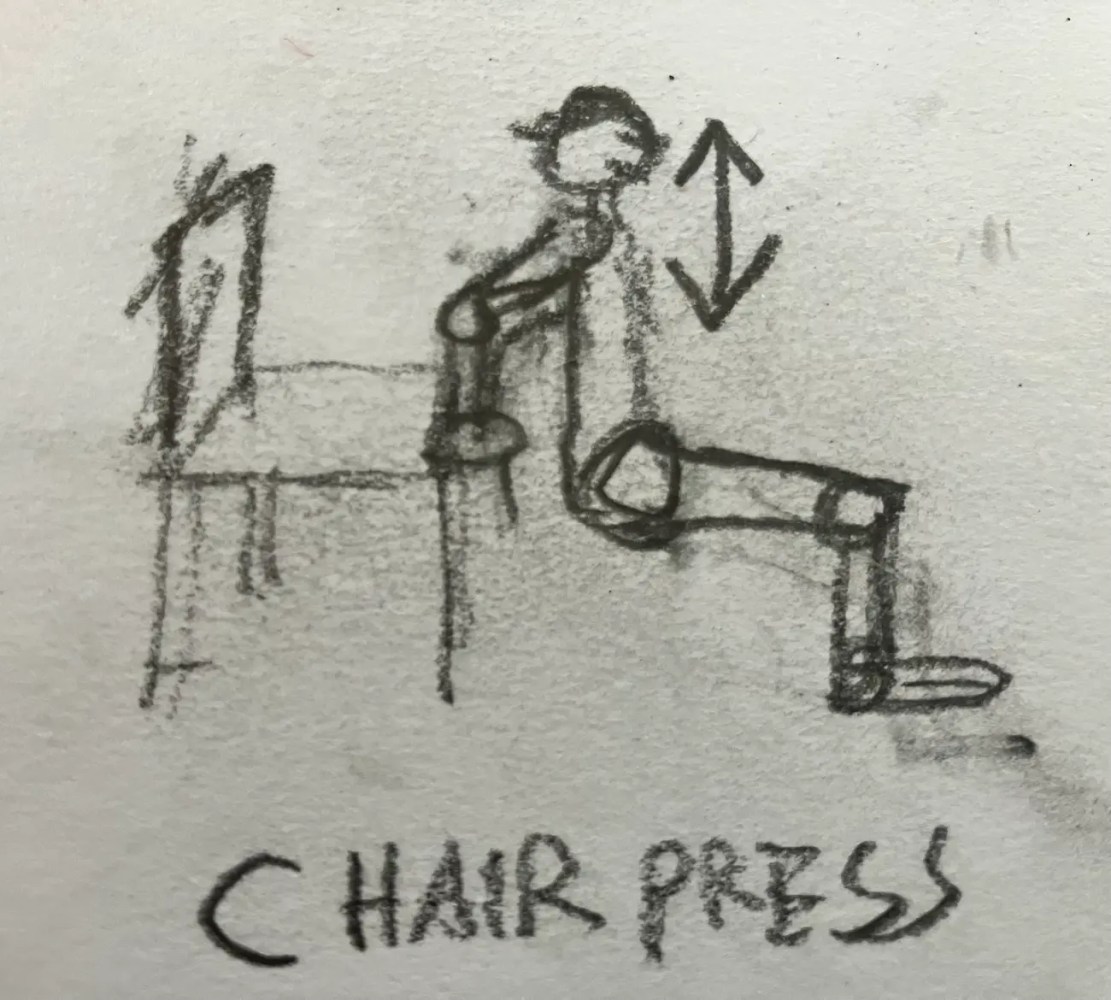
- Strengthens triceps and shoulders
- Helps with stability and transitions
- Controlled movement up and down
.
7. Plank (Stability)
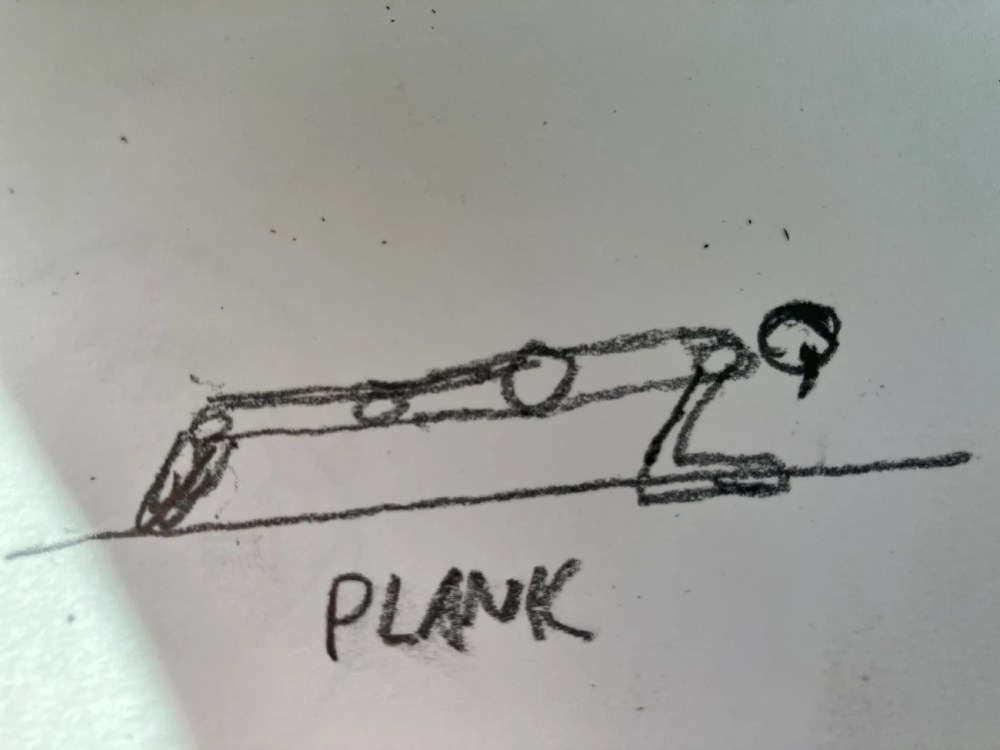
- Builds core stability
- Supports posture and alignment
- Keep the body in one line
.
8. Child’s Pose (Reset & Recovery)
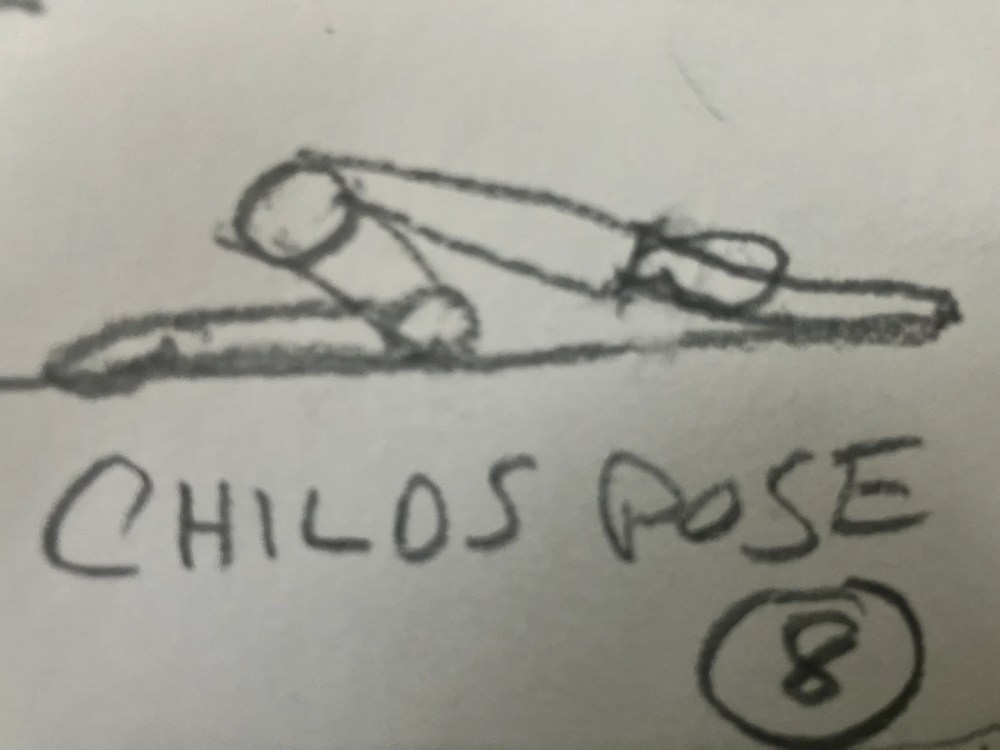
- Releases tension
- Restores breathing
- A simple but important reset
.
Simple Equipment for Paddle Training
This setup is the easiest and most effective tool for kayak and SUP workouts:
- Bodylastics basic kit and door anchor
- Vinyl-coated kettlebells (8–10 lb)
- Light dumbbell, heavy book, or gallon jug of water
- Sturdy chair or bench
.
Simple Workouts That Stick
Some is better than none.
You don’t need a full workout every time. A few minutes, one or two exercises, or a short sequence can make a real difference—especially when done consistently!
When the system is already on a door, ready to go, the barrier to starting drops dramatically. You can step into a room, pick up the handles, and begin. That’s how consistency builds and how strength and good form become reality.
.
🎥 Kayak & SUP Technique Videos
These videos are designed to build really strong muscle memory for proper paddling form. I’ve taught kayak and SUP for 30 years. I’ve made a point of always having a Beginner’s Mind and learning and respecting the wisdom of other practitioners, new and old.
The team at MKC learns and practices until we fully understand new techniques to better help you.
As mentioned earlier, Bruce Lee was an early mentor of mine, although I never met him. He did not believe in any one method or style being the best. He learned, integrated, and evolved his Jeet Kune Do Martial Art. I follow this philosophy with our kayak and SUP instruction: If nothing within you stays rigid, outward things will disclose themselves. Moving, be like water. Still, be like a mirror. Respond like an echo.
Forward strokes are what most paddlers use 95-99% of the time. It’s the one stroke that’s never finished, just like a golf swing or tennis serve. It can be a little better next time, and it can be used as a moving meditation.
At its core, there are some strict fundamentals. Yet, 90% of recreational self-taught paddlers may never ever know of them. Here’s a chance to do so. It may seem mechanical at first, yet good fundamentals set the stage for fluidity and flow at another level. It’s one step back to go three steps forward. Stay the course, it’s worth it!
I’ve focused on rotation style SUP stroke, as it’s often more accessible for sea kayakers to learn because it retains many kayaking fundamentals.
There are very effective hinge thrusting styles that don’t emphasize rotation and hinging is the top choice of SUP professionals. Seychelle’s video below will give a glimpse. At MKC, we teach them both in SUP Basics Classes and see what works best for every student.
I’m a firm believer that kayakers should add SUP to their paddling repertoire. The movement patterns are complimentary and married by the Catch, which is the connection of the paddle blade to water. Alternating between the standing and the seated keeps my body better balanced.
Yet, when I get back in a well-designed kayak or surfski in choppy conditions, it’s evidently more seaworthy than a SUP. However, SUPing with wind at your back where you’re surfing as much as paddling – aka downwinding – that’s special.
Videos to watch:
-
- Wand Basics video series*
- SUP wand basics
- World-Class SUP technique by Lisa Carrington and Seychelle. Look for their clean catch, body connection, and rhythm and glide.
*The Wand in the videos is simply a 48-inch long 3/4-inch diameter wooden dowel painted blue with some white tape put in the center. The wooden dowel (pretty easy to find in hardware stores) and a piece of tape in the middle is enough. PVC T-handles are nice but I now prefer pre-cut tennis balls on the ends. I’ll show you how it gets things going in next blog.
.
The Goal: Smooth, Efficient, Enjoyable Paddling
You need consistent sessions. Build the connection. Refine the movement. Let the body learn.
And over time, the stroke becomes lighter. The rhythm appears. The glide improves.
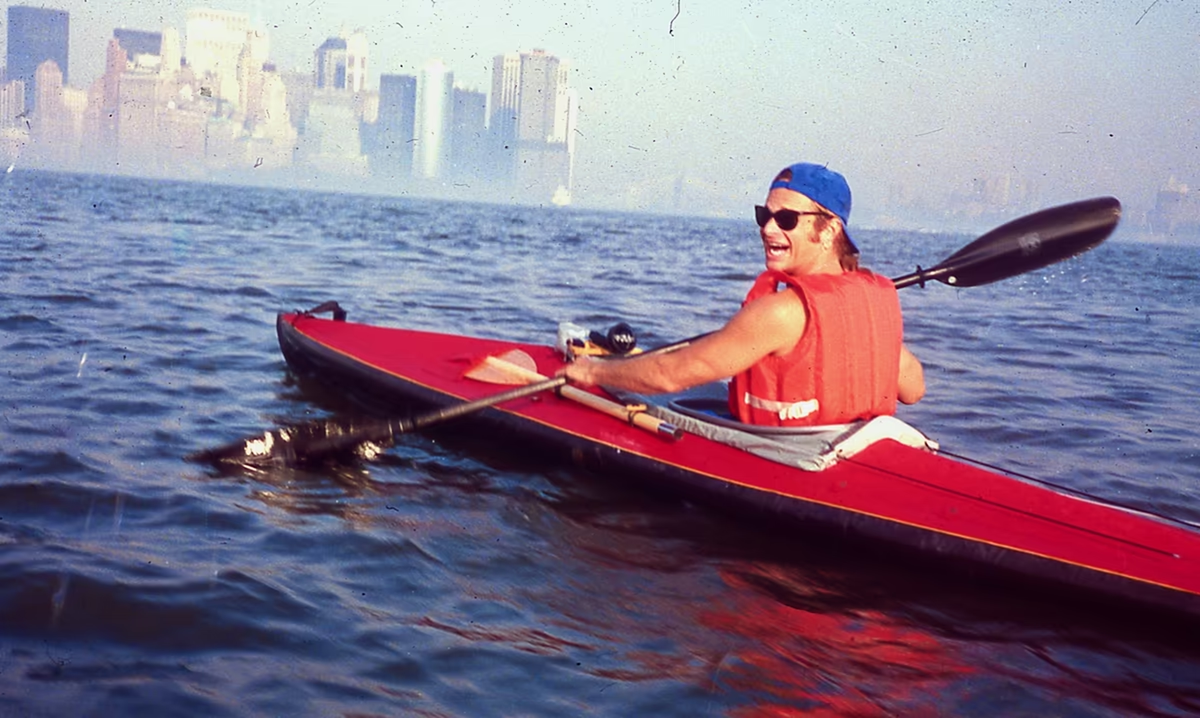
That’s long term fun!