The Overlooked Power of Paddling: Where Fitness Meets Wellness
Best for: Pure fitness, training, and technique-heavy blogs targeting athletes, cyclists, and runners.
🚣🏽♂️ The Quick Skim
Just like a high-performance automobile utilizes the exact same precision engine mechanics whether it is redlining at 8,000 RPMs in Sport Mode or purring smoothly at 1,800 RPMs in Eco-Glide, the true magic of paddling lies in a single, unified technique that can seamlessly shift from an aggressive, 1,000-calorie interval burn to a deeply calming, parasympathetic recovery cruise. The secret to unlocking this fluid duality isn’t dropping your form when you slow down; it requires keeping your legs, hips, and core fully interconnected in a graceful, low-tempo rhythm that naturally coaxes your nervous system out of New York’s high-cortisol trap and into a state of total mind-body flow. Because you cannot access the raw power of Sport Mode or the restorative grace of Glide Mode with a sloppy, half-baked arm stroke, every athlete and energy challenged professional must first install the baseline movement patterns in our foundational Kayak Basics 1 Class or SUP Intro Skills Session—the mandatory mechanical launchpad required to join our multi-intensity Weeknght Training Club or to truly master the art of the calm weekend cruise.
Fitness or Wellness? On the Water, You Don’t Have to Choose.
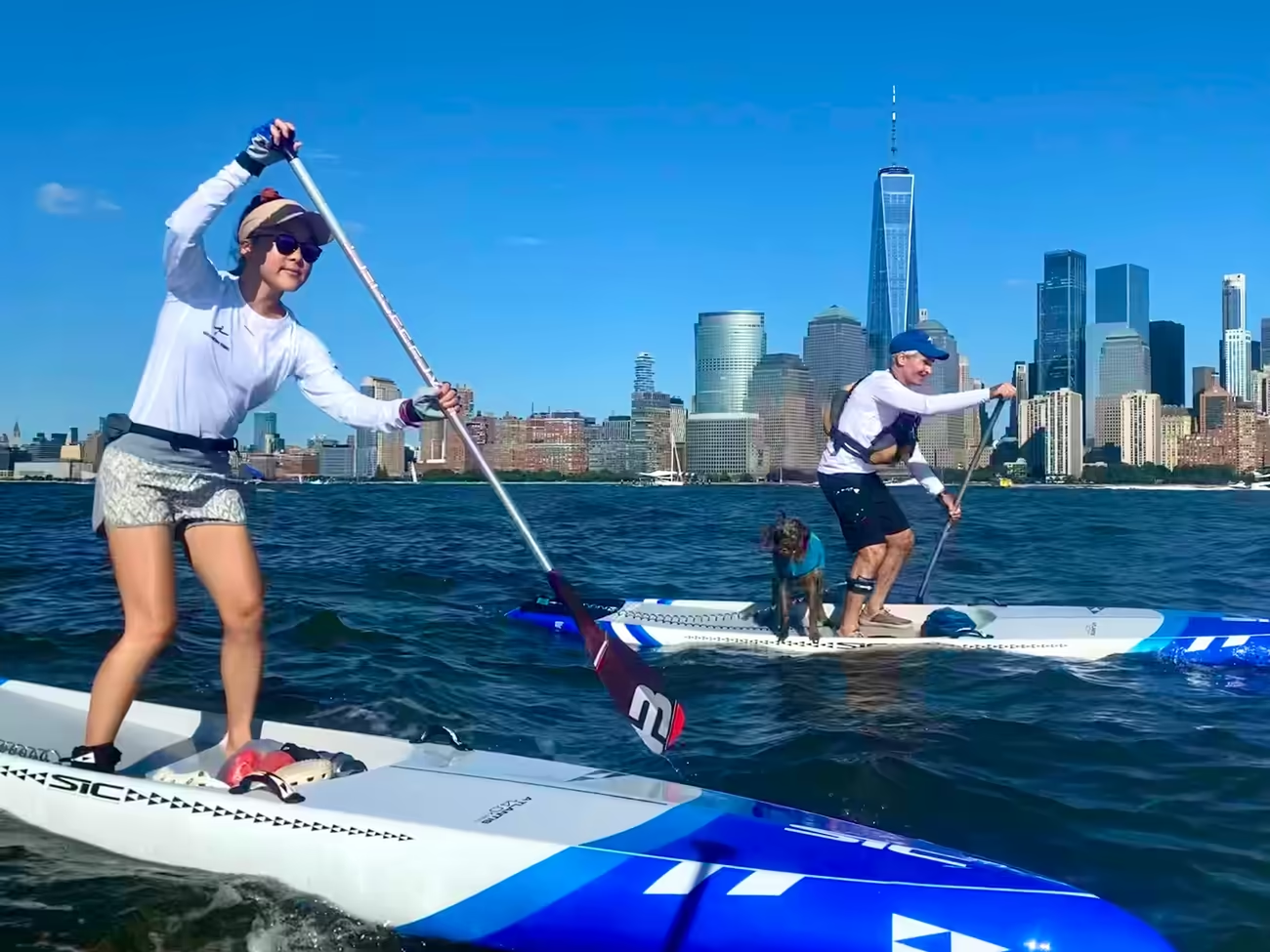
There is a quiet divide in the modern fitness world.
On one side, there’s fitness — intensity, effort, metrics, output, competition with self or others.
On the other side is wellness — calmness, healing, recovery, breath, restoration.
Many people try to move between the two. A hard workout here, a yoga class there. Push, then recover. Yin and yang scheduled into different hours of the week.
It is challenging to “stay on schedule,” especially if one session or the other is missed for countless reasons.
But what if one activity could offer both — sometimes in the very same session?
My name is Eric Stiller, and I’ve paddled my whole life in remarkable places — Alaska, Patagonia, the Galapagos, Australia, Costa Rica, Hawaii, the Caribbean, and thousands of miles all around New York City.
And yet, when I am asked where my favorite place to paddle is, my answer has never changed:
“In the boat or on the board.”
Because at its best, paddling becomes something more than exercise. It becomes rhythm — a connection between body, water, and movement that begins to feel less like effort and more like flow. A glide. A kind of dance between you and the water. A waltz. A tango. A union. Total absorption in the task at hand.
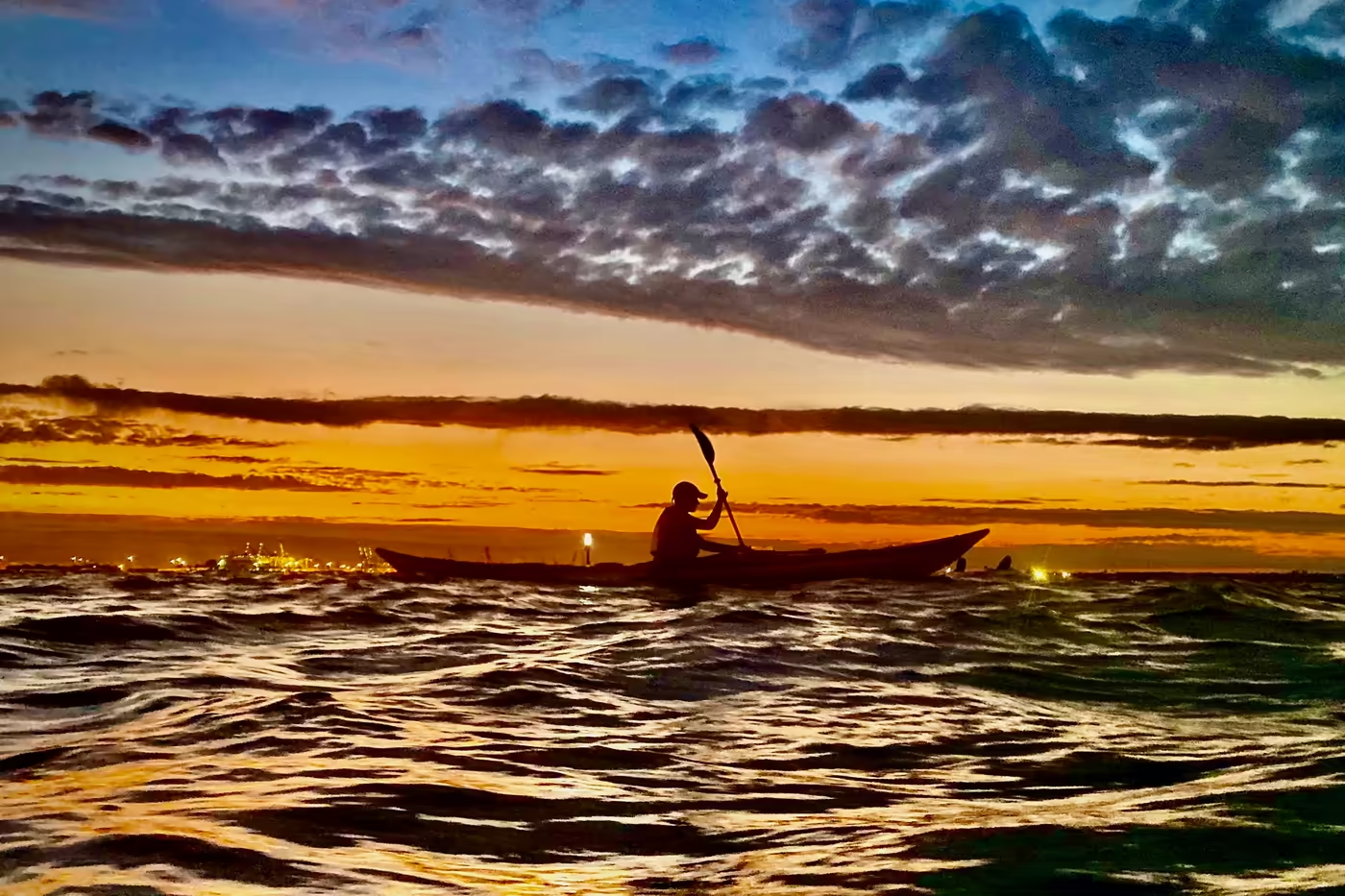
Psychologists call this the flow state — a condition of deep focus and immersion where action and awareness begin to merge. The concept was first described by Mihaly Csikszentmihalyi and later expanded by writers like Susan Jackson and Steve Kotler, who explored how athletes access it through challenge, environment, and full mind-body engagement.
(I’ve explored this idea deeply in a previous piece: The Art of the Flow.)
In paddling, that state is not abstract. It’s physical.
The catch of the paddle.
The connection through the whole body.
The glide of the hull.
The perpetual feedback loop between paddle, body, boat/board, and water.
Harmonizing.
Done well, it begins to feel like the water is no longer something you are moving through — but something you are moving with.
From a purely physical standpoint, paddling checks nearly every box.
It’s:
- full-body
- low impact
- cardiovascular
- technically engaging
Paddling asks for coordination, not just effort. Legs, core, and upper body working together in a connected chain.
Different Paddling Disciplines Offer Different Challenges & Rewards
Stand-up paddleboarding (SUP) emphasizes standing balance and proprioception. Surfskis reward rhythm and forward drive. Sea kayaks offer glide and control in wind and choppy conditions. Whitewater kayaks operate in a more spontaneous, instinctive, faster-moving environment in multiple directions. Canoeing, like SUP, takes away the second blade, making each individual stroke somewhat more important.
And yet, across all of them, there is a common thread.
There’s an old idea — found in Taoist and martial traditions — that deep mastery in one discipline reveals the principles of many. Not that skills transfer instantly or perfectly, but once you understand the underlying language, you are no longer starting from zero.
In paddling, that language is the relationship between the blade and the water.
Whether it’s a long, narrow racing kayak, a maneuverable whitewater boat, an outrigger canoe, or a SUP, the fundamentals remain: how the paddle blade enters, connects, and engages with the water — and then how your body translates and transforms that engagement into movement.
Master one discipline well, and you begin to understand the rest. You can step into — or onto — another craft not as an expert, but not as a complete beginner either. You recognize the patterns. You feel the differences. You adapt.
Over time, the boat becomes something you “wear,” and the board becomes an extension of you, allowing you to merge and operate in water, not so unlike a fish, a seal, or a dolphin.
Indigenous Arctic peoples understood this about kayaks thousands of years ago.
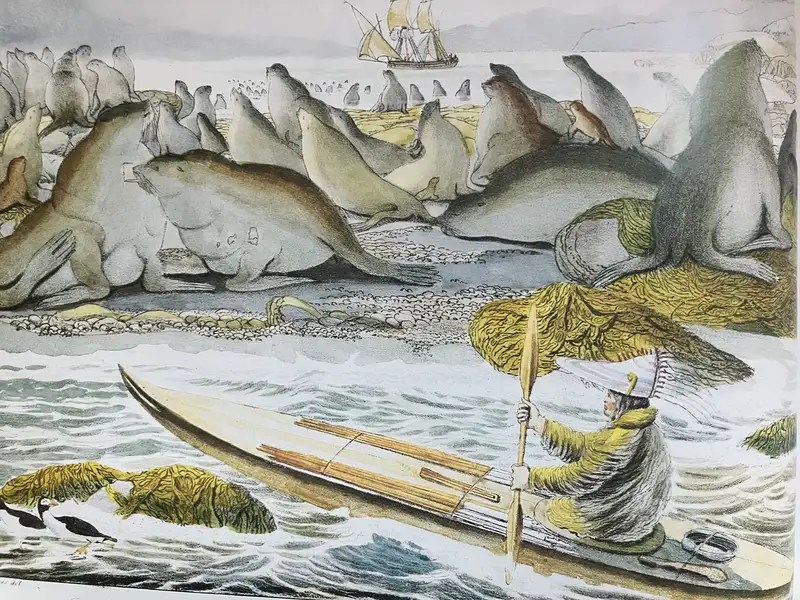
Kayak and SUP fishing have become sporting activities all their own these days. My good friend and freestyle whitewater kayaking mentor Eric “EJ” Jackson makes the ultimate version of this idea, combining the best of kayak and SUP.
So…
If you’re drawn to speed and rhythm, one craft may suit you.
If you prefer flow, control, and play, another may suit you.
If you prefer stability, peace, and plenty of camping gear space, another may be right.
But beneath those differences, the connection remains the same.
This is part of what makes paddling so enduring — it offers both depth and variety, allowing people to evolve without needing to leave the activity behind.
Take the time to learn one paddling discipline well! Learn how FORM & FUNCTION are essential partners and can be practiced at home with simple equipment.
Good technique can make almost any paddle craft come alive for you, whether it’s your uncle’s plastic rec boat at the lake or the racing SUP rental at the world-famous Chattajack Race.
A race that many MKC paddlers have done!
KAYAK AND SUP RACING
Competition Provides a Goal and Makes Paddlers Better Every Time
Preparing for and participating in a paddling race is a great experience! Every paddler I have seen go through the process has added another gear to their paddling capabilities forever. Moreover, they have often trained with and/or met other racers who have become colleagues and friends. For some, it’s a one-time thing. For others, it becomes a way of life. I do recommend preparing for and executing at least one paddling race of some sort.
Let us remember that the root word for competitor is competere — which means “to strive together,” “to seek together,” or “to come together in the pursuit of something.”
A great local race near our boathouse is THE HUDSON CUP, organized by our good friends at Ke Aloha Outrigger in Hoboken, NJ. The four-mile race has been a favorite for many of our members, and the 10-mile surfski and outrigger race around the Statue of Liberty is epic!
The Key to Paddling for Fitness
By this point, you have learned a little bit about the variety of paddling possibilities and have been introduced to the idea that proper technique comes first to unlock all the connections in the sport.
Without learning full-body technique, paddling rarely rises beyond a recreational activity — and for many, that’s fine. Just getting out on the water has enormous benefits all its own. We will dive deeper into that later in this article. However, to find the magic in paddling — the flow state, the merging of you and the elements, the ability to transcend recreation and find a different level of joy, movement, and satisfaction — technique comes first.
Golf is rarely satisfying if you always hit the ball into the woods. Tennis is not much fun when the ball always hits the net, etc. It’s hard to miss the water with your paddle, but it’s different when the paddle goes in well with the whole body behind it. I have yet to find a better visual example than Olympic athlete Lisa Carrington here, mostly in slow motion.
From a fitness perspective, this video shows:
- strength
- endurance
- speed
- balance
- coordination
- power
You cannot properly tap into this deep well of fitness without the technique. It is almost a given that the majority of paddlers still paddle predominantly with arms and shoulders. This might condition those specific muscles to a point, but it will never engage the primary cardiovascular system or consistently engage the core. The legs and core will remain passive passengers on a slow vessel instead of becoming the prime movers and big engines of the kayak and SUP.
This is almost always the reason various fitness books and articles categorize paddling fitness metrics inaccurately by a mile!
I remember being shocked, then almost amused, seeing metrics for calories used per hour that counted paddling as less than golf — something like 180 calories — when I know definitively that, depending on intensity and technique, paddling can burn 400–800 calories per hour, getting it into the neighborhood of running and cycling. Stand-up paddleboarding adds additional balance and stability components and increases overall demand. Race training can push 1,000 calories per hour. This is all in the neighborhood of running, cycling, rowing, and cross-country skiing.
AND
It has less impact on joints than running, court and field sports, and even pickleball. Paddling is more “natural” than rowing in that you are looking forward in the direction you are going, and you can usually change direction quite easily. This is essential in busy waterways with no support boat looking out for you.
PADDLING IN ALL DIRECTIONS IS A DIFFERENT ASPECT OF FITNESS
And Can Improve Most Racket, Batting, Field, and Court Sports
These days, a lot of paddling is “locomotive” style — going from point A to point B primarily using the forward stroke. Ultimately, a method of movement that was as natural as possible and could be kept up for long periods of time is what allowed Indigenous people all over the world to move their self-propelled vessels efficiently to hunt, fish, trade, move, and migrate to more hospitable territories. Life or death was a powerful innovator and produced wonderful vessels.
In the last hundred years, competitions and expeditions continued to influence and evolve designs in boats and boards, and perhaps more importantly, really honed the biomechanics and kinesiology of human movement and technique regarding moving these vessels as fast as possible.
Flatwater kayaking became an Olympic sport in 1936, slalom kayaking became one in 1972, and kayak cross arrived in 2024. Kayak polo has been going strong for half a century, and freestyle kayaking is on a level all its own. SUP technical racing hones balance, reflexes, speed, and endurance.
All of these paddling sports require awareness, dexterity, and multi-planar capability that “point A to point B” paddling often does not. Simply practicing the basic skills for these sports will work the body and the mind in a myriad of ways, keep the sporting aspects of paddling evolving for you, and make a small patch of water a world all its own. The fitness established through them crosses over to many other sports. I encourage you to peruse the following at your convenience:
FITNESS AND ME
I didn’t arrive at these perspectives on paddling for fitness and wellness through a life of paddling alone.
I’ve had a lifetime in “fitness” — well before it became the multi-billion-dollar fitness industrial complex that it is today. As a smaller-than-average lad, the “sand in the face” cartoons struck a little too close to home. I could run like the wind, but a strong wind could almost lift me off the ground.
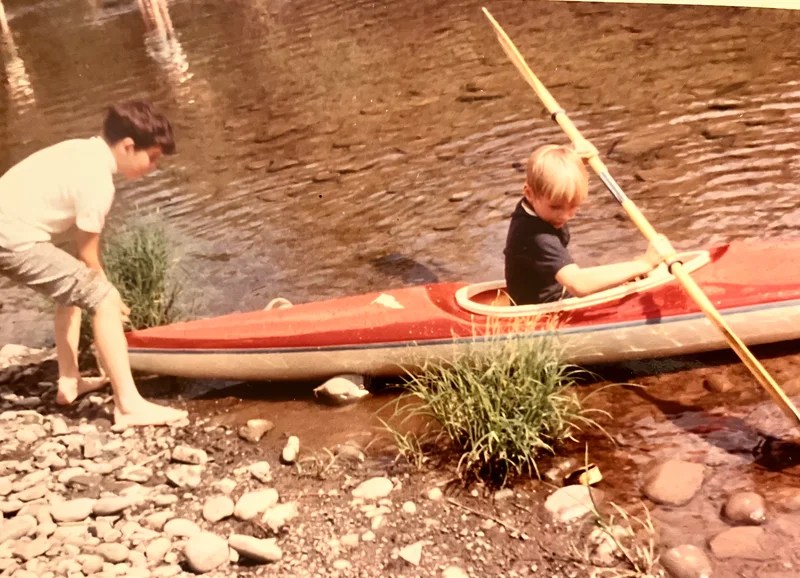
My first fitness purchase — via my parents — was the Bullworker when I was about 12 years old. It was an isometric trainer I could barely press together, though I could pull the bow part of it fairly well thanks to my early life kayaking.
Not long after, I wedged a pull-up bar into my closet doorway.
Like many kids of my era, I was shaped by a mix of iconic influences: Bruce Lee, Julius Erving, Pelé, Franz Beckenbauer, and Muhammad Ali. I ran track, played basketball and soccer, and loved the feeling of movement. I also really liked to practice, with a team or on my own.
Then came Arnold Schwarzenegger.
His book, The Education of a Bodybuilder, became a kind of bible for me and Tom, a neighbor friend. We followed his progressive resistance training system in my basement with mutual commitment and dedication. Three to four sessions per week, two hours at a time.
The weights we could lift increased steadily, and our teenage bodies changed notably.
It worked!
Here are a couple of pages that I preach as well as practice.
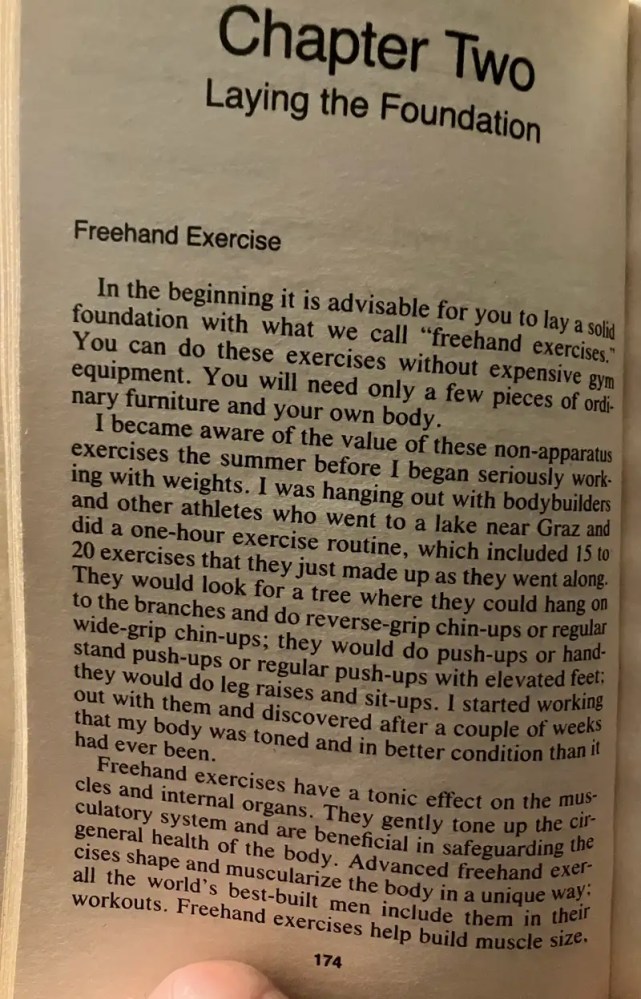
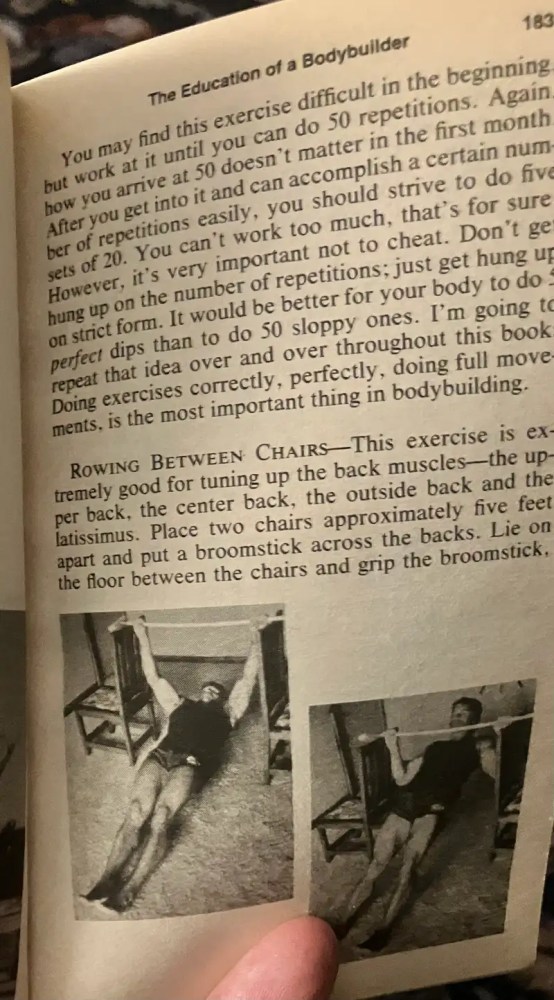
“Build a foundation” and “Don’t get hung up on the number of reps; just get hung up on good form.”
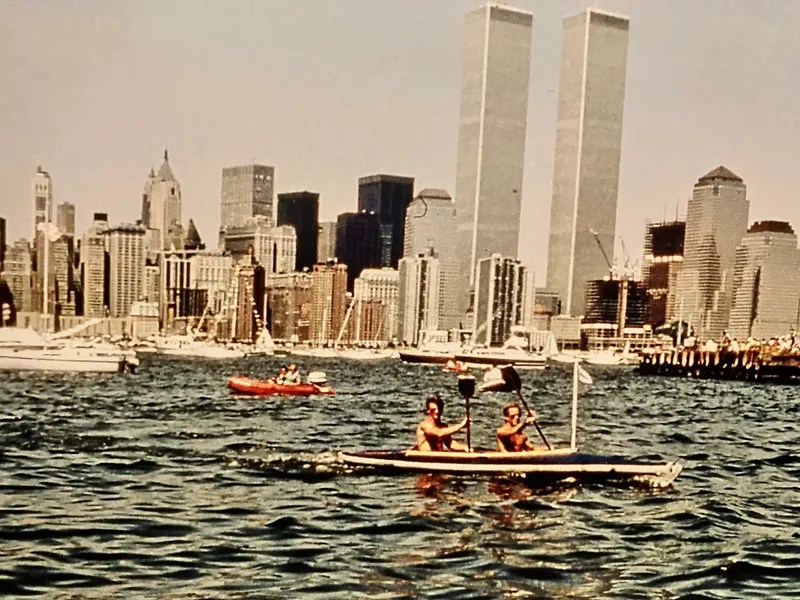
The fitness “habit” has stayed with me ever since. Right after college, my dad and I introduced my dear friends Dave Klevatt and Dave Damore to kayaking and applied our young, fit bodies to the Delaware River with my dad. Then we started to explore all the waters in and around NYC, Long Island, and other East Coast classics like Block Island, Maine, Adirondack lakes, Newport Harbor, Boston Harbor, and the like.
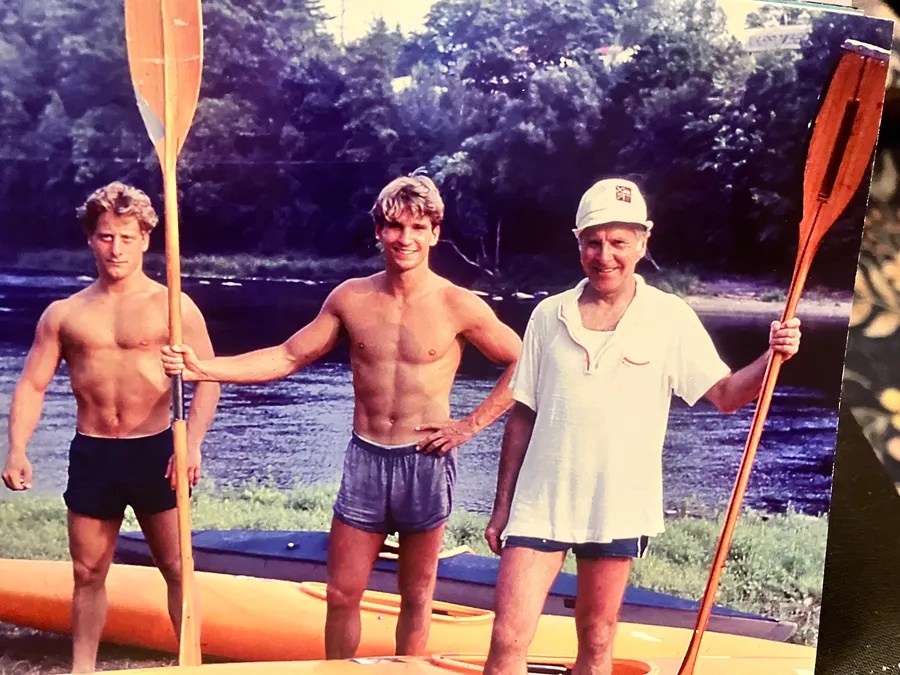
We were never going to be pro bodybuilders, but strength training opened up performance capacities in my childhood sport and helped me lead and share those experiences with lifelong friends and family.
Thank you, Dad, Bruce, and Arnold!
ENTER RADU
New York Harbor, the Hudson River, Central Park, and a makeshift Klepper shop basement “gym” kept my friends and me actively fit for the most part, yet a more disciplined form of proper gym workouts eluded us in those “Bright Lights, Big City” years, where our cardio was as likely to come from a big night dancing away at Area, Danceteria, the Palladium, or even Studio 54 on its last legs as it was from a long paddle or cycle in the park.
One day, a stately, well-dressed woman named Sandy Hill Pittman came into the Klepper shop and, after a few minutes of perusing all the pictures on the wall, asked, “You don’t go around Manhattan in kayaks, do you?”
A long story short… she asked if I could take her, her trainer, and her trainer’s trainer on such a trip. I said yes, and soon I was paddling next to a short, compact man with a barrel chest and a fascinating accent. His name was Radu — Radu Teodorescu.
I made sure by the end of the 30-mile Manhattan circumnavigation that everyone involved would not forget that kayaking is a vigorous activity. The legs of Radu’s drysuit were filled with water up to his knees, and he said:
“Airik, there must be a leak in this suit.”
Sandy, Dierdre, Tim, and I all looked at each other and did not know whether to laugh or explain.
It was not raining that day, and Radu had not fallen in the water, nor did any big waves come into the boat. The “water” in his sealed suit legs was sweat, perhaps approaching a quart or more in each leg.
I forget who sheepishly told him that, but the response was classic:
“Dat is not possible. I do not sweat like dat.”
He meant it.
No one was going to argue.
Later, Radu invited me to visit his gym “sometime.” I didn’t realize it would be for revenge.
I really didn’t know about Radu. I didn’t know his classes were often sold out, sometimes weeks in advance. His client list was a who’s who in NYC. He was also known as “the toughest trainer in town.” He gained a certain fitness immortality through his fitness training of Cindy Crawford, arguably the most famous model of all time.
and
Cindy Crawford Shape Your Body Workout
The video is a classic and well worth a view! To this day, it’s a great workout.
I didn’t know Radu and I already shared a common client: John F. Kennedy Jr. His mom, Jackie Onassis, had bought a two-seater Klepper kayak from my dad for his birthday, and he had come to the shop on his own to buy a single-seater, which he later used on many expeditions. Radu writes in his book:
“John is a great example of one of those students who actually follows my advice and takes regular classes to maintain a solid foundation of overall fitness… In fact, the times I am most likely to interact with John are when he has an adventure to go on. He’ll come up and say, ‘Hey Radu, I’m going kayaking in the Red Sea. Gotta get in shape for it.’ He’s always functioning at 80% of his physical potential… so then we just bring him up to 100% for each particular challenge.”
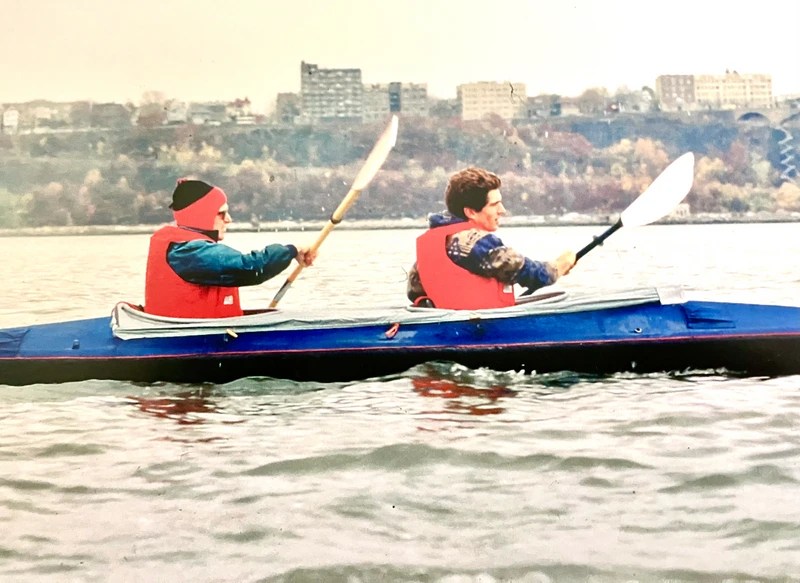
It wasn’t long before I was crossing paddles, and then sneakers, with JFK Jr. on the water for NOLS Manhattan circumnavigations and in Radu’s gym on 57th Street.
When my friend Tim, who was in the boat with Radu on the trip, and I visited the gym just to say hello one Saturday morning, we had had a long, late-1980s NYC Friday night.
“Hello, Airik and Teem. Here are some shorts and shoes — the class starts in five minutes.”
An hour later, we were reduced to two puddles of sweat. Walking down the subway stairs was a challenge, but the real deep tissue soreness took days to appear and many more days to dissipate.
I loved it. Tim, not so much. It reminded me of all my sports practices and workouts. I became a devout client. Radu became a kayak client of mine. We both took his clients out in kayaks from his East Hampton studio location. He introduced his wife and both sons to the sport. We went to many locations, local and far away, with the boats. We called the workouts with the boats near Sag Harbor “Surf and Turf.” Paddle, run up and down dunes, paddle home.
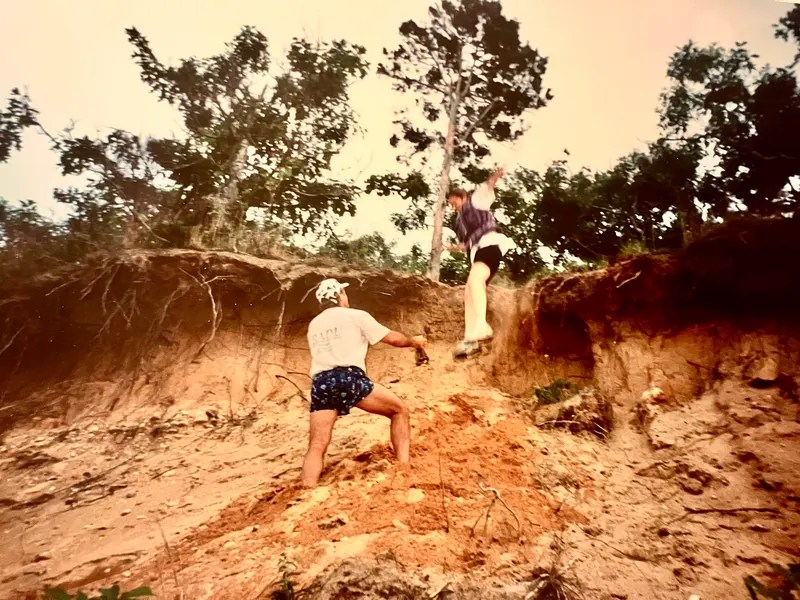
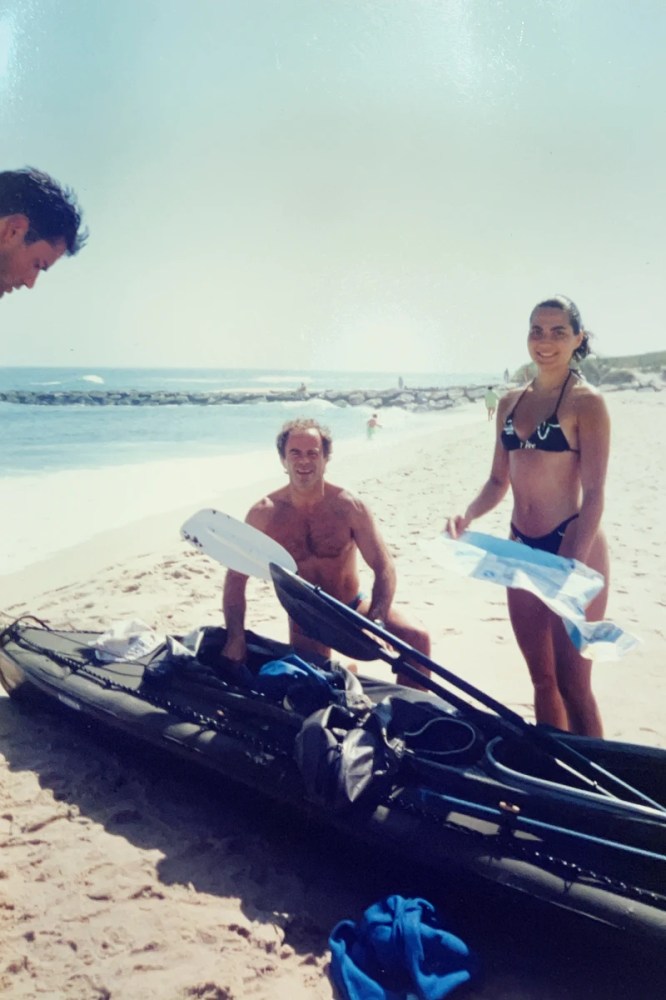
Radu said, “My dream has always been to motivate masses of people to become healthier and happier through exercise; I want everyone to experience the joy of movement.”
I would eventually become a trainer at Radu’s and specialized in an outdoor Central Park class I later called Primal. It was Radu who made sure I said yes to the Australian Tony Brown when he asked me if I wanted to try to go around his country in a kayak.
“Airik, you must go. No one will ever want to do this again.”
And so I went and wrote a book about it — Keep Australia on Your Left.
There is a part in the book that mentions “mini Radu” workouts I would do some mornings on the expedition to keep my legs in good shape — lunges, squats, some side-to-side shuffles, etc. It was good that I did, because I decided to bicycle from Darwin to Melbourne, 2,300 miles, fully loaded and solo. The combination of nearly 4,000 miles at sea and over 2,000 miles on land would not have been possible without the Radu training. I had never gone farther than 20 miles on a bike before and never loaded with full kit.
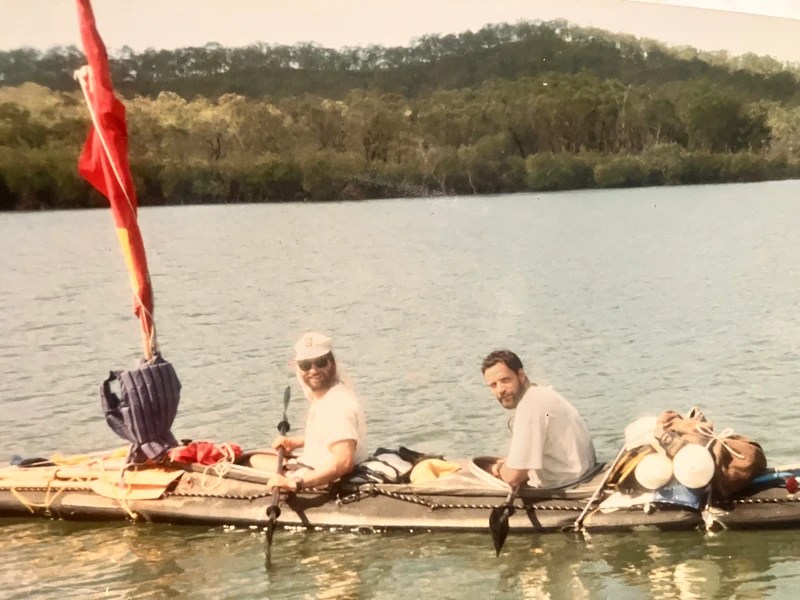
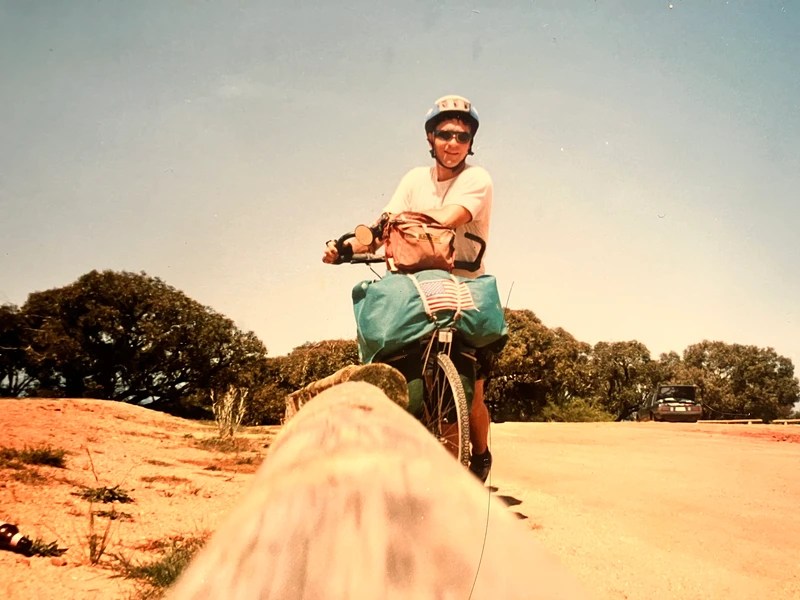
The final result of this kayak-bicycle expedition combo was this — with not a day in a gym for almost a year.
But… it was the foundation of fitness that allowed it!
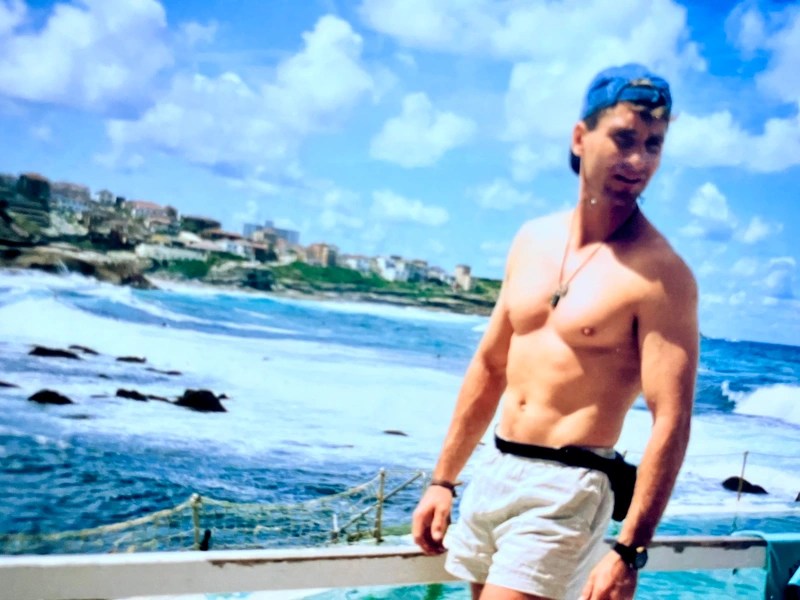
Thank you, Radu!
OUTDOOR ATHLETE MEETS ACTIVE RECOVERY, YOGA, MEDITATION & NUTRITION
When I got back from the 10-month combined expedition to Australia, I found New York City and urban life to be… a bit too much. I slept on the 3/4″ Therm-a-Rest mattress that I had slept on for nearly 300 days, on the sun porch of my family house — the closest thing to camping indoors for months.
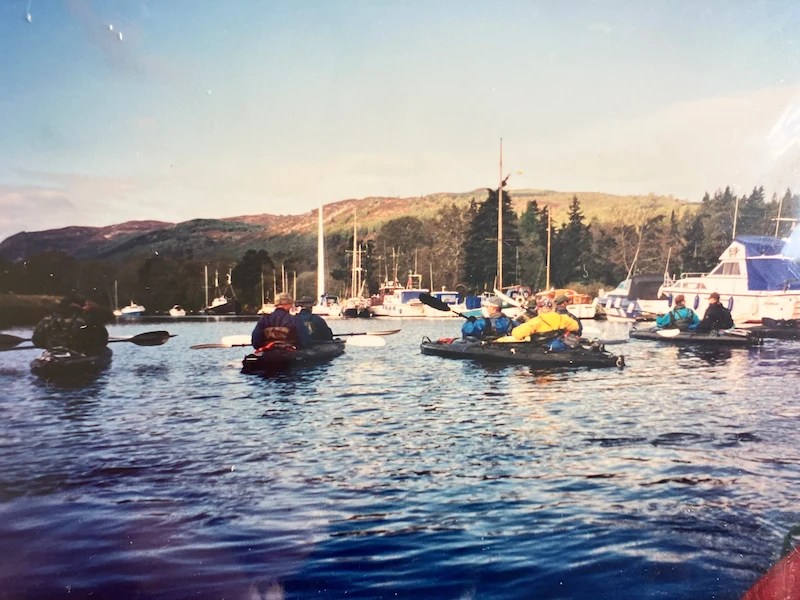
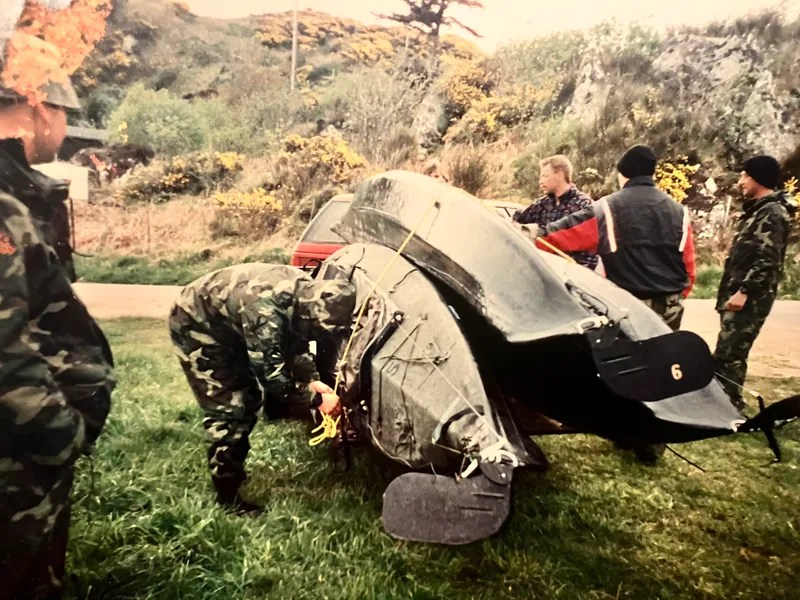
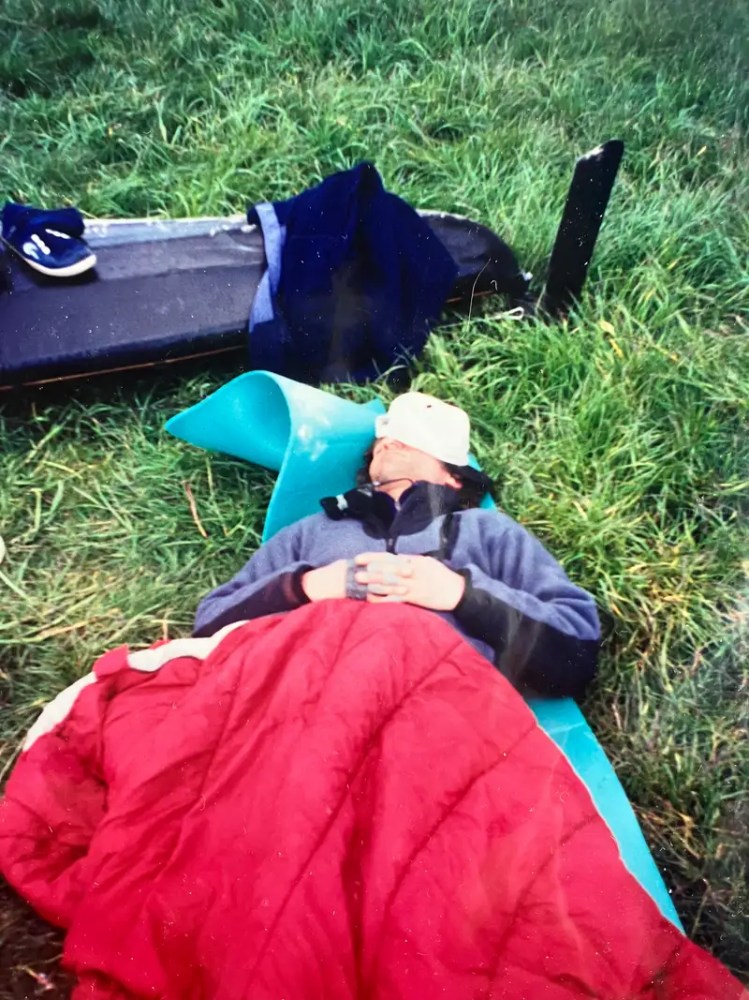
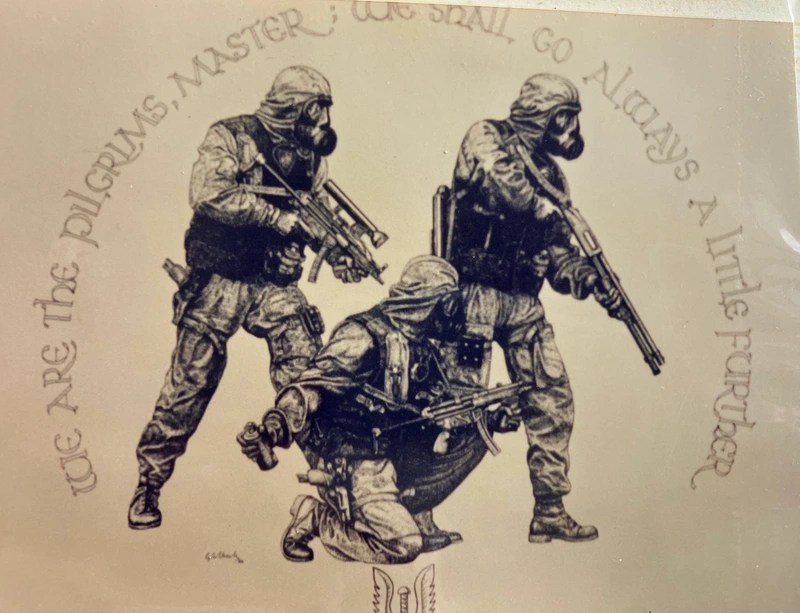
I went to an outdoor survival class at the famous Tom Brown Jr. School because I knew I was missing a skill set for extremely remote wilderness travel. Then I was invited to do a five-day, 24/7 kayak race with special operations units in Scotland who used Klepper kayaks for “recon and infiltration.”
Finally, a health scare similar to Lance Armstrong’s, but not as bad, gave me a choice: let fear erode the confidence in my body and retreat from intensity, or become stronger than ever before while realizing I would need a more balanced and wholistic way.
There was a sense that I had been operating at an “unreasonable” pace for quite a span of time.
The universe heard me.
ENTER STEVE ILG
A 1992 Outside Magazine cover “Fitness Special,” with a spandexed fellow with 80s alt-rock hair standing on one leg on a rock and holding his other leg up to his chin, titled “This Man Can Break You and Build You Up Again,” introduced Steve Ilg — a multi-sport outdoor athlete, author of many books including Total Body Transformation, and an expert climber who had fallen 40 feet from an ice climb and said it was his two water bottles attached to his harness that prevented his back from snapping.
As it was, his back and pelvis were very badly hurt, and doctors did not give him any chance of resuming his multi-sport athletic life. He had won four world championships in five different sports. He was the extreme athlete before there ever was the X Games.
He refused the prognosis and instead went to Eastern healing methods of breathing, yoga, Ai Imiwa, a precursor to Tai Chi, and meditation. In this deep inner healing and recovery process, he was presented with dreams or visions of movement modifications to heal the damage. He refused painkillers and listened to his body’s intelligence to know how much, or how little, to do. He fully recovered and can still do the majority of the sports he had always done — to this day, almost 40 years later.
Like Bruce Lee, who was able to fully develop his martial art, Jeet Kune Do, after a traumatic back injury, articulating and writing down the whole concept, Ilg merged his Eastern healing and recovery insights with his Western sports periodization training, including strength and cardio, with a strong philosophical backbone to “be” your fitness instead of just “doing” your fitness.
He blended four Lifestyle Principles with five Fitness Disciplines into his WHOLISTIC FITNESS (WF) system.
#1 Lifestyle Principle — Breath and Posture
This was just what the doctor ordered for me: an outdoor extreme athlete who had integrated yoga, meditation, and the healing arts into his training. Up to that point, the two worlds were clearly divided. He states in his book Total Body Transformation:
“The Light of Yoga is a powerful one. But no less powerful is the light of Western fitness training when we are taught a more spiritual attitude to it.”
BINGO.
I went all in with WF. Fully committed to the program, no excuses. We communicated by fax and eventually email. I still remember putting on the snowshoes and running for two hours around the local track after a heavy snowstorm to stay on my cardio schedule. I did the program for four months, the entire winter, and then continued to apply the principles and disciplines for my students at Radu’s and to maintain many elements of it to this very day.
Steve included my input into his book The Winter Athlete in a section called “Polar Paddling.”
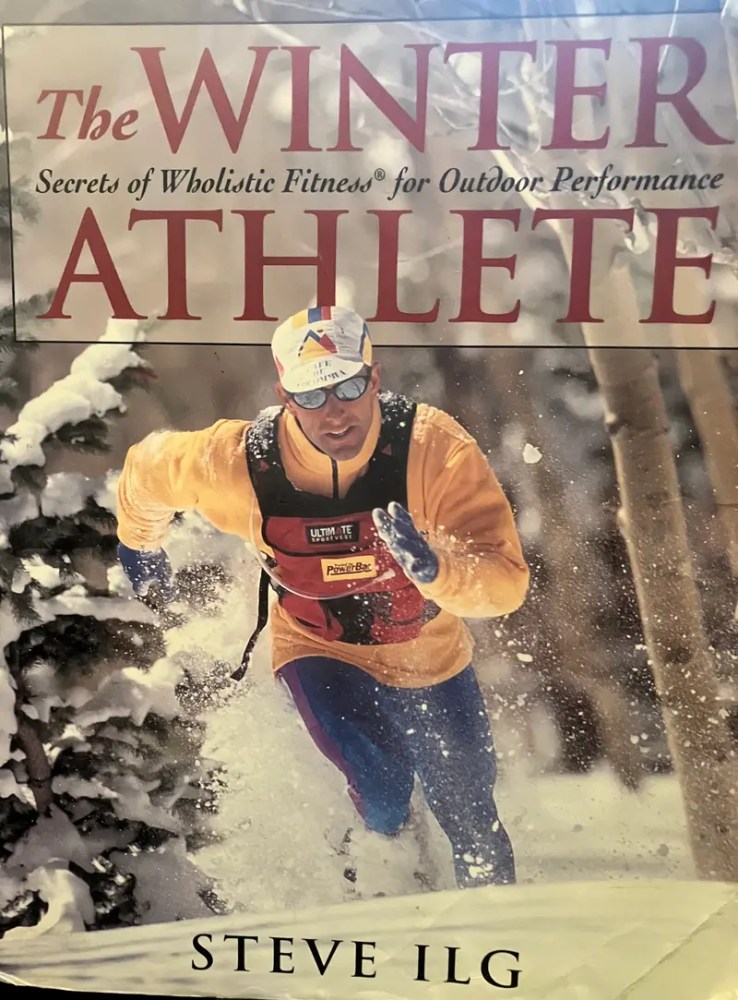
To this day, I have not heard the paddler’s catch explained with better biomechanical detail as to what muscles are working:
From The Winter Athlete, page 261:
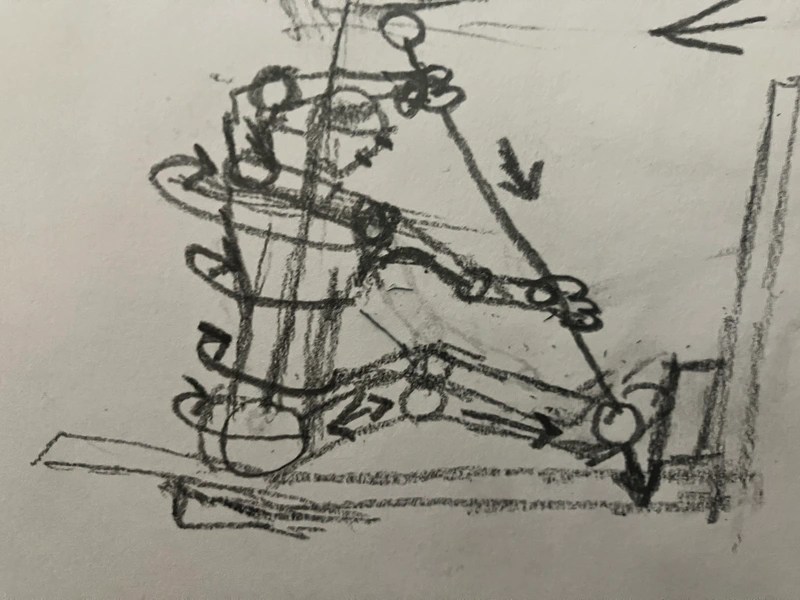
“The Catch: This phase begins with a horizontal blade position and ends with the blade submerged in the water. If our left blade is the submerged one, it got there thanks to anterior rotation of the thoracic vertebrae. That means the oblique and erector spinae are at work, as well as deep rotators of the back, especially on the left side. The shoulders are also busy. While the rhomboids and the pectoralis rotate the left shoulder girdle downward, the glenohumeral joint extends by the latissimus dorsi, teres major, and some sternal pectoralis. Of course, the forearm muscles are engaged mostly via isometric contraction, especially the digit flexors… Down below, the hamstring, hip, and ankle are flexed, ready to extend for driving the hip backward. In this preparation, all these muscles are in isometric contraction…”
My sketch for the moment just after the catch, as applied to an indoor workout, is here:
This Wholistic Fitness intervention I volunteered for successfully added a whole new level to my fitness and wellness foundation. It provided the energy, clarity, and restored vitality to help me write my book, start, execute, and sustain Manhattan Kayak Company. It helped me teach, guide, and instruct others in the profound benefits of outdoor and indoor fitness/wellness from a deeper, more enlightened, balanced, inspired, and nurturing perspective.
Namaste, Coach Ilg!
FITNESS & WELLNESS ARE NOT PRODUCTS!
They Are Practices That Are Lived, Repeated, and Refined Over Time
The people who shaped my understanding of this — my dad, Radu Teodorescu, Steve Ilg, Arnold Schwarzenegger, Bruce Lee, and Eric Jackson — didn’t separate training from living.
They embodied it.
Radu spoke of the joy of movement.
Ilg brought deeper awareness and a more spiritual union between Western training and the inward focus of yoga.
Arnold emphasized attention — mind to muscle — full engagement in the act itself.
Bruce Lee refined motion to its essence — “Be like water” — flowing precision, efficiency, and presence.
Eric “EJ” Jackson said, “The amount of energy you have is how much energy you expect to have,” and “It’s actually amazing how much more fun you have when you smile while paddling.”
My dad, Dieter Stiller, said: “Fresh air, sunshine, exercise.”
All of them rooted deeply in a rich soil of integrity.
Different paths — same truth.
The work is the practice. The practice is the Way.
What they understood — implicitly or explicitly — is that fitness and wellness are not opposing forces.
They are a duet.
There are times to push — to train hard, to build, to challenge your threshold.
And there are times to restore — to breathe, to play, to laugh, to eat well, to sleep, and to let the mind-body recover and reset.
Sometimes the two mix together at the same time.
Get the balance right, and something more sustainable emerges.
The masters do it habitually — learning, integrating, relearning, always evolving while always having a beginner’s mind.
A Bridge Between the Modern World and the Wisdom of Mastery
Most of us are not masters, and modern life tends to separate the body from the mind more than ever. So today, until one has re-embodied more organically over time, there are more tools than ever to help find balance.
Devices like the Apple Watch and Garmin fitness watch now track things like:
Heart Rate Variability (HRV) — a marker for recovery and nervous system readiness.
Resting Heart Rate — a baseline fitness and fatigue indicator.
Training Load/Readiness Scores — guidance on when to push or pull back.
Sleep Quality — one of the strongest indicators of recovery.
These are useful signals — reminders and connectors to something the best practitioners have always known:
When to press — and when to rest.
But no device replaces awareness.
And no product replaces practice.
Ideally, at some point, you will rely on these tools less and less, and eventually you will:
Gnothi Seauton
Know thyself.
More and more!
In recent years, a new term has entered the conversation:
HEALTHSPAN
This is in contrast to lifespan.
Not just how long you live — but how well you live.
How long you remain:
- capable
- mobile
- resilient
- clear in mind and body
The longer you practice fitness and wellness — done with awareness, balance, and consistency — the more naturally you can move toward this.
Not perfectly.
Not without setbacks.
But directionally, over time, it moves you toward a longer, more vibrant stretch of life where you can still do the things that matter to you the most.
You see it in people who have lived this way for decades.
Individuals like Steve Ilg and Eric Jackson continue to operate at remarkably high levels well into later years — not because of shortcuts, but because of long-term commitment to the practice. A practice of fitness and wellness in the mountains, forests, rivers, lakes, oceans, and in their gyms… shared with clients, colleagues, friends, and family.
They didn’t chase quick results.
They built capacity over time — and learned how to sustain it.
At the same time, we’ve also seen the cost of pushing too far, for too long, without enough balance.
Elite performance can come with a price. As a world-class Ironman triathlete said:
“You get one set of tires.”
He did not mean for his bicycle.
The body keeps the score.
The lesson is not to avoid intensity. It’s to understand it.
To know when to push — and when to shift gears with awareness and, sometimes, humility.
Because if fitness is pursued without wellness, it can shorten your healthspan.
And if wellness is pursued without strength, it can limit your capacity within it.
The goal is not one or the other.
It’s both — working together over time.
Healthspan isn’t built in intense bursts. It’s built in sustainable habits — over years, not weeks.
It’s fine to experiment with a variety of things that interest you, yet sooner or later, it’s best to settle on a short list of activities that you like and that facilitate the things you like, rather than picking things that someone else — including cultural trends — says you should do and should like. To me, that’s the only way your fitness and wellness habits will be sustainable.
THE RETURN TO THE WATER
And this is where, for me, the circle closes.
After decades of training — weights, bodyweight calisthenics, boxing, running, cycling, soccer, yoga, structured programs, mentors, breakthroughs, setbacks, recoveries —
I keep coming back to the same place:
The water.
Because paddling — done well — naturally brings fitness and wellness back together.
Not as separate sessions.
Not as scheduled opposites.
But as something that can exist at the same time.
You can paddle hard.
Driving through the catch.
Engaging legs, core, and upper body.
Elevating heart rate.
Doing sprint-cruise-sprint intervals.
Building strength, endurance, and power.
Sharing your session with paddling friends all over the world on Strava.
That’s FITNESS.
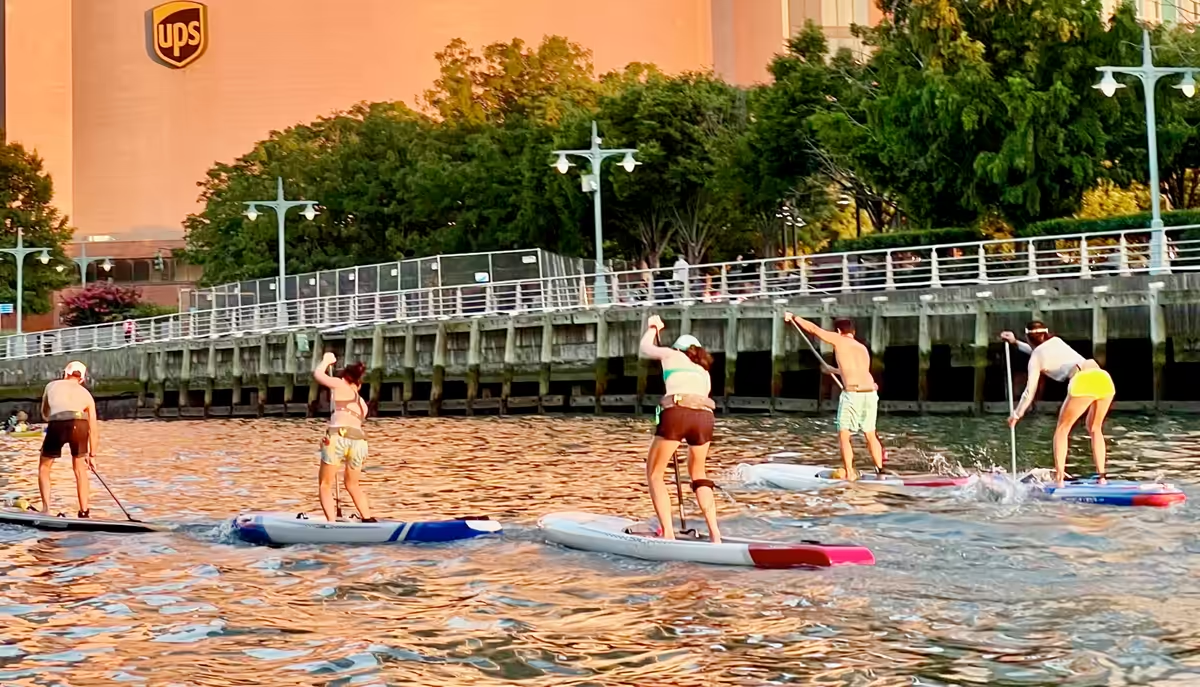
And in the very same session — or the very next stroke — you can ease off.
Find rhythm.
Feel the glide.
Breathe fresh air.
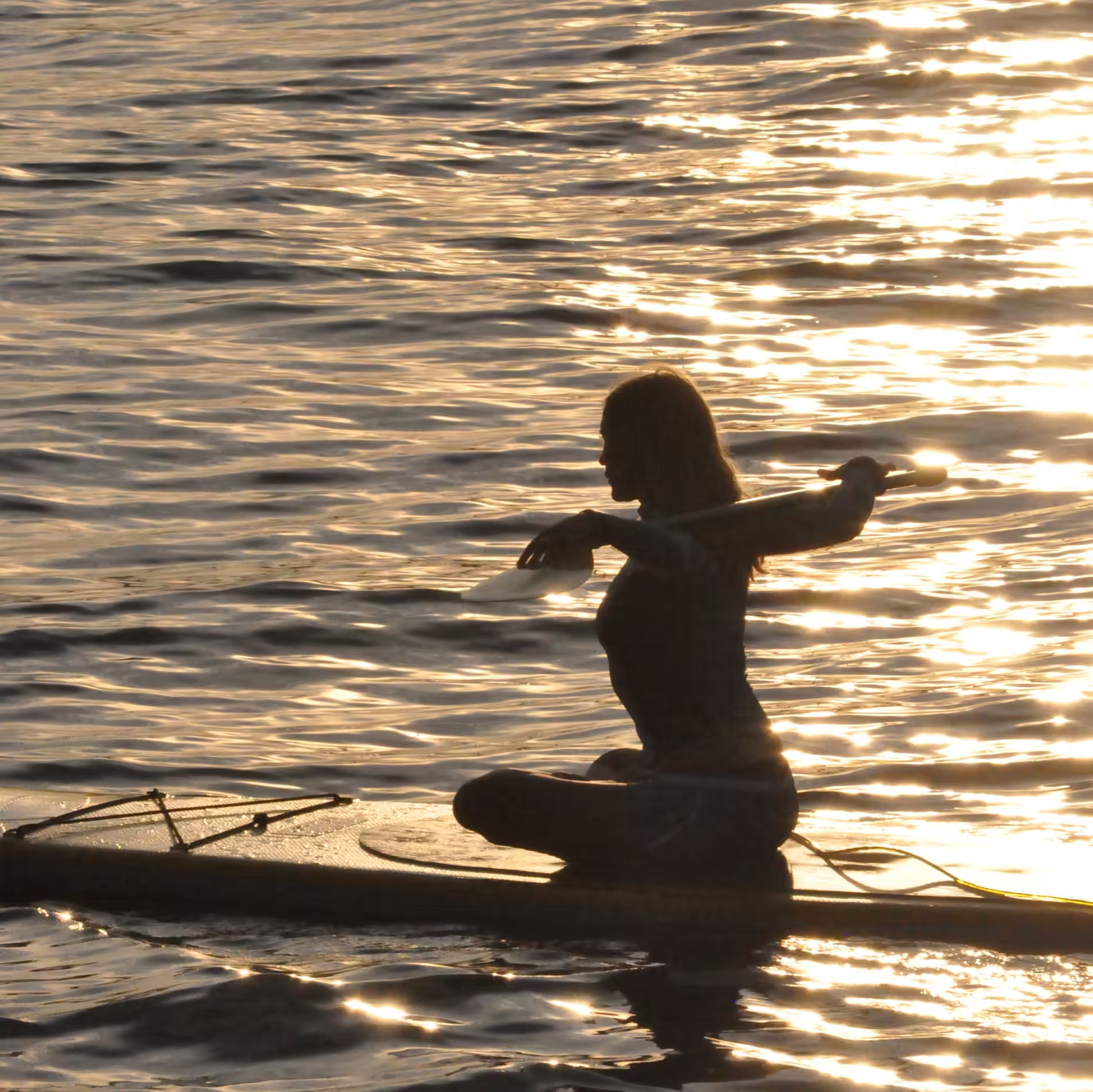
Look up and see the beauty of the golden light of a setting sun illuminating the NYC skyline.
Take it all in.
Let the nervous system settle.
THEN
Share a dinner and some laughs with your paddle mates.
Take a warm shower with your favorite shampoo.
Feed your cat or dog their favorite food.
Read a chapter of your favorite book or jot some notes down in a journal.
Get a good night’s sleep.
That’s WELLNESS!