The Art of the Flow: Why We Really Paddle the Hudson
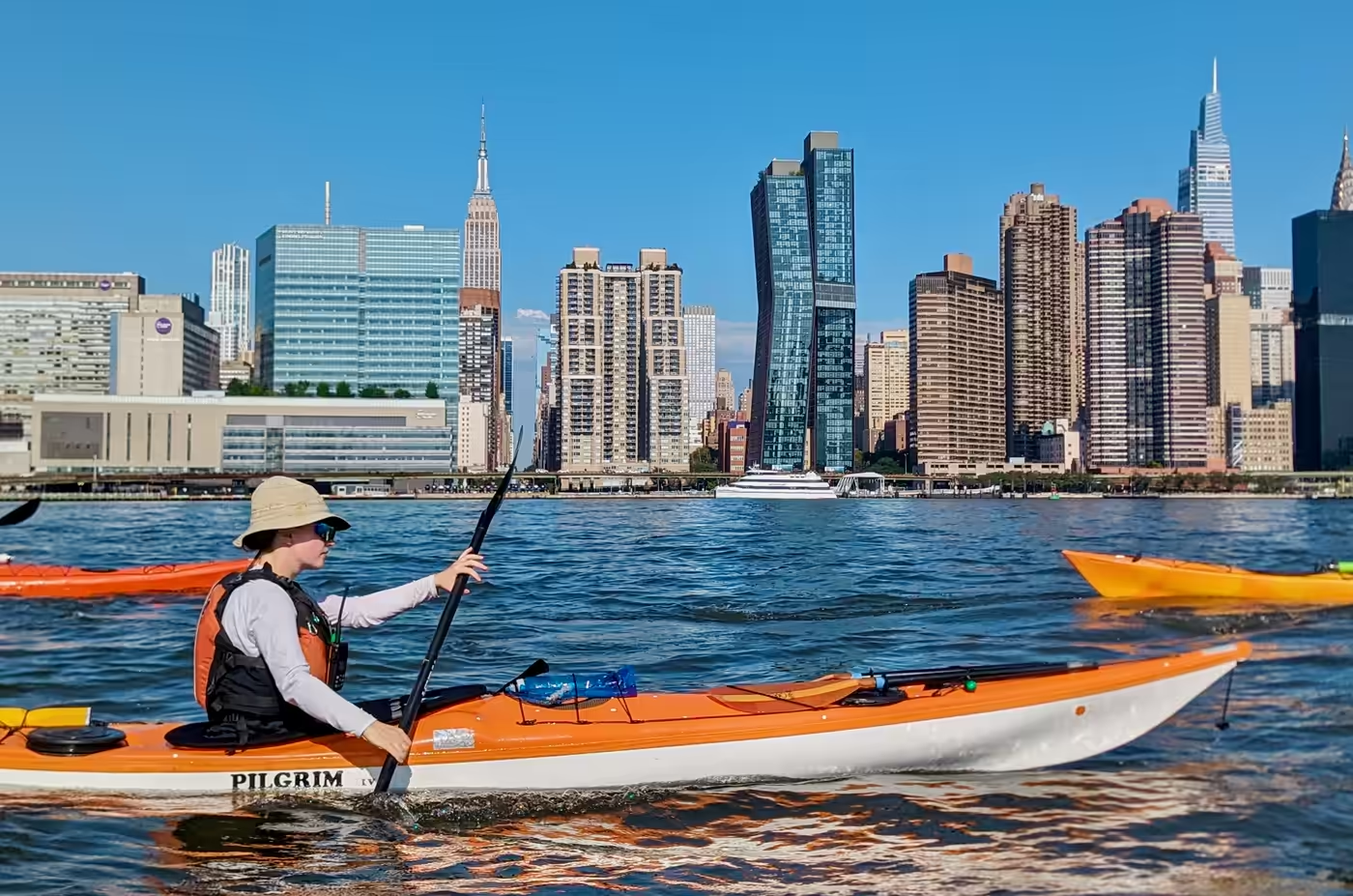
Flow State: Timeless Transcendence On The Water.
I’ve paddled my whole life in wonderful places throughout the world. This includes halfway around Australia, Alaska, Patagonia, The Galapagos Islands, British Virgin Islands, San Juan Islands, Scotland, Maine, SF Bay, Florida Keys, Bahamas, Kauai, Costa Rica, Brittany, Bavaria. Then, there are the thousands of miles in the NYC area, upstate NY, and Long Island.
However, whenever I have been asked: “Where’s your favorite place to paddle?” I always say: “on the boat or the board”. I’ve always loved the connection to the water through my paddle, body, boat, or board and search for rhythm, harmony, the glide and grace of motion. It’s a Waltz, Tango, a dance with the water. The more I think about it, the more I realize I’m merging with The Flow.
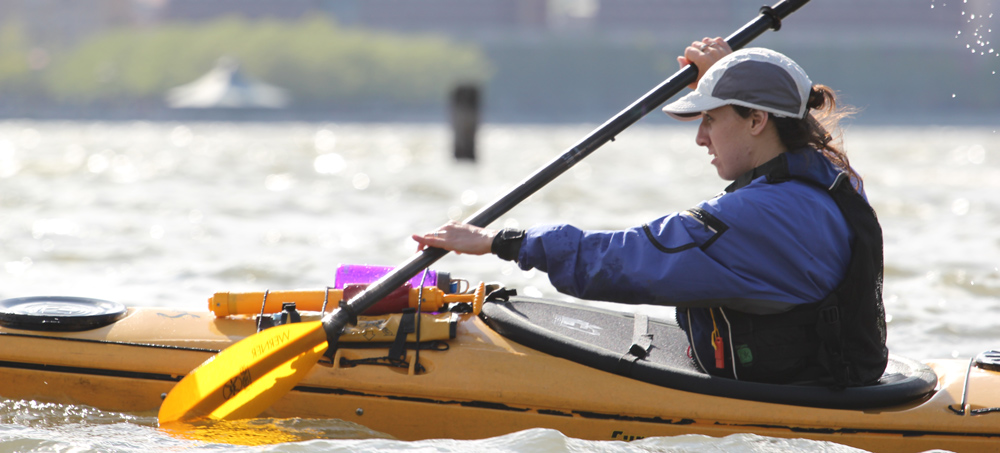
My Kingdom Of Flow
What is Flow? Well, the more you research it, the more you’ll find out how and why Flow just might be the Elixir of Life itself. Moreover, the bottle of this elixir is INSIDE every one of you.
What is Flow?
Dr. Mihaly Csikszentmihalyi – pronounced Me-high, Chick-sent-me-high – literally wrote the book on Flow and you can read it here.
A quick definition is: In positive psychology, a flow state, also known colloquially as being in the zone, is the mental state of operation in which a person performing an activity is fully immersed in a feeling of energized focus, full involvement, and enjoyment in the process of the activity.
I read Mihaly’s book, but it’s Steven Kotler who takes Flow and turns a lake into an ocean of understanding in his book The Rise of Superman.
One of my most dedicated students for the last decade and half, Peter Collins, a former high-speed motorcycle track racer, expert skier, ultra endurance runner, adventure racer, downhill rollerblader, advanced kayak and SUP paddler, and most importantly, a warm chipper chap, gave this book to me for my birthday. Within two pages, I felt a symphony of illumination and a chorus of ah-ha moments.
On page 106, the full wave landed on my head as Doug Ammons, one of the best whitewater kayakers in the world and a rare 21st century renaissance man stated:
Action and adventure sports demand deep embodiment…especially kayaking. Big Rivers accelerate you in every direction at once. This puts your vestibular system into overdrive, this isn’t just your mind paying more attention–suddenly your entire body is paying attention. What happens is outside your conscious capabilities. There are no words. Our language becomes that of the river. All the features of the river speak to you and you to them through motion. There is tension, threat, there is joy and release, and overall a deep, deep sense of flow. You are literally part of the flow of the world.
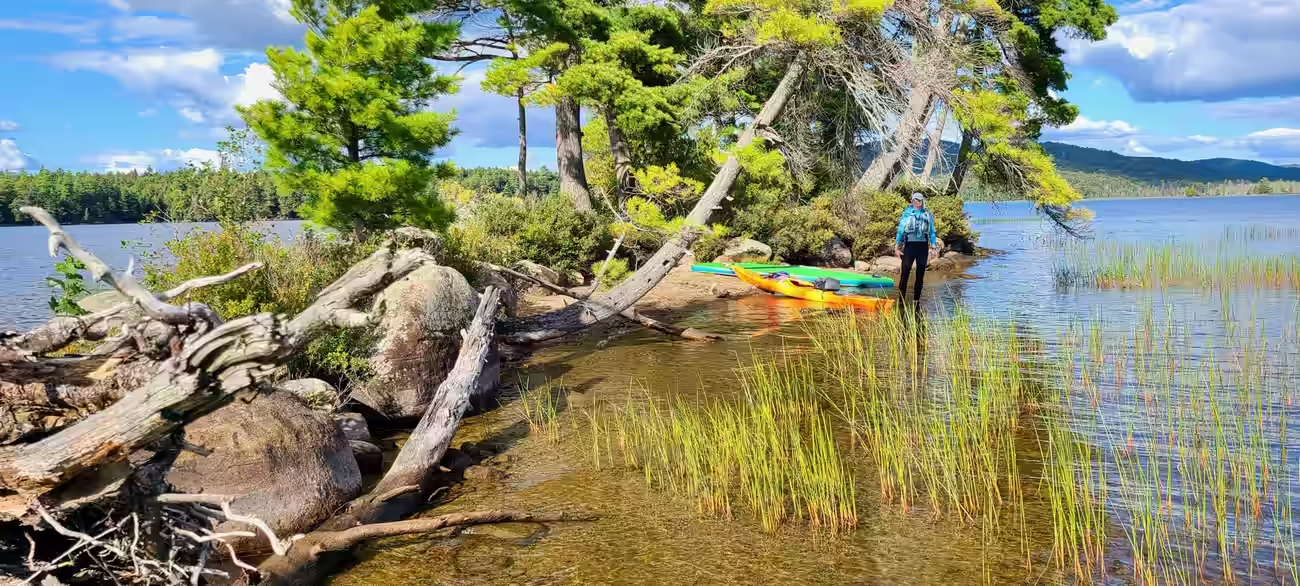
Primal Desire
I like to call this desire Primal. I believe it’s rooted in all of us. This is why I kayak, SUP, and surf ski, and why I believe you should too. Paddle sports easily provide the three strongest external triggers to enter flow:
1. RISKINESS
2. RICH ENVIRONMENT
3. DEEP EMBODIMENT
Moreover, these sports keep on giving as you progress. Higher risks, richer environments, deeper embodiment, ad infinitum.
We can see it in the present moment in the super-focused flow of whitewater, surf, downwind, or paddling in confused seas. This Flow lives on the Fun-Survival edge. It can be the Flow of long distance, hypnotic, super-rhythmic paddling, perhaps into and through the night. This is paddling at a cadence that joins with your heartbeat, changes the perception of time, and seems like it can go forever. This is better know to most as “the runner’s high” and it’s what got me and Tony Brown across the Gulf of Carpentaria with no sleep for 5 nights.
The Beginner’s Mind
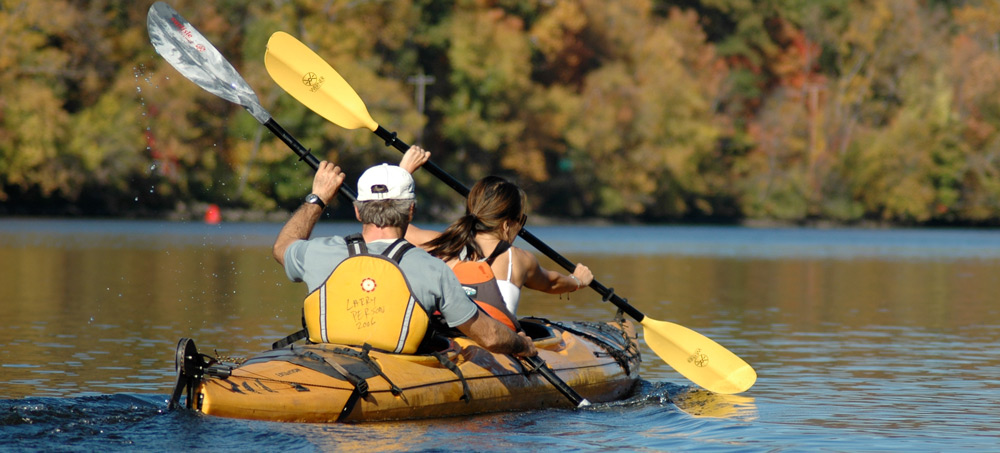
To put this in perspective, just showing up for your first paddling lesson often checks the Riskiness box. The new boat or board and body of water you’re on checks the Rich Environment box. Then, your whole body is adjusting to this new activity…which is Deep Embodiment aplenty.
There’s better than a coin toss chance you’ll enter a mild Flow state in this first lesson. The key is that the instructors give you clear goals, immediate feedback, and keep the challenge-to-skill ratio right at the cusp of your capabilities. The chances for flow to happen get higher with each of the following lessons.
Go Slow To Flow
All of us, when beginners, first have to struggle. There are no two ways about it. This is really about taking one step backwards to go two, three, or more forward. This is the natural “fear of the unknown” with its chemical bodyguard named cortisol. It says: “fight or flee” and it has a cousin named adrenaline. We need to sneak past them to get past fear and find our flow’s ON button. If we do this right, we can convince cortisol and adrenaline to give us a quick boost so we can get there sooner.
Once discovered, it can unleash the most potent combination of chemicals the human body has to offer: norepinephrine, nitric oxide, dopamine, anandamide, serotonin, and oxytocin. Flow is a multi-trillion dollar pharmaceutical industry already inside of you. Frankly, it’s how we humans have gotten here. Without it, our species would have withered on the vine a long ago. Some call it magic.
In order to achieve flow on a consistent basis, you’ll need to have some skills and and keep developing them over time. Then you start tapping into “Peak Performance” and unleash more Flow, and so on.
Better Than Any Bottle
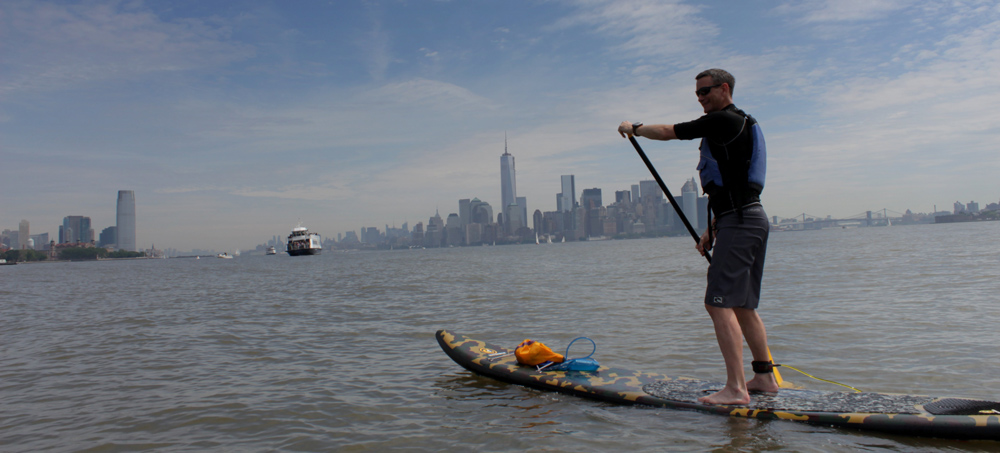
Often, you can achieve basic flow states by just being out of the office, on a beautiful patch of water, in nature, on a calm sunny day, with no place to be. Then, add some paddling, or maybe casting with your favorite fishing rod. For many, this is just what the doctor or your soul ordered. For most people, this pure “recreational” paddling is just right to help balance a busy life. Moreover, just being near or on water has proven to be its own wonder drug in recent studies. Check out: Wallace Nichols Book called Blue Mind.
I believe that teaching New Yorkers how to kayak could dramatically reduce Prozac prescriptions. I’d also say that learning how to ply NYC waters in a paddling craft is more important for more people than ever. The digital world is frying our nervous systems. It;s keeping us in a diametrically opposed state, a hyperactive beta state. This is often felt as anxiety, with the potential to merge into depression.
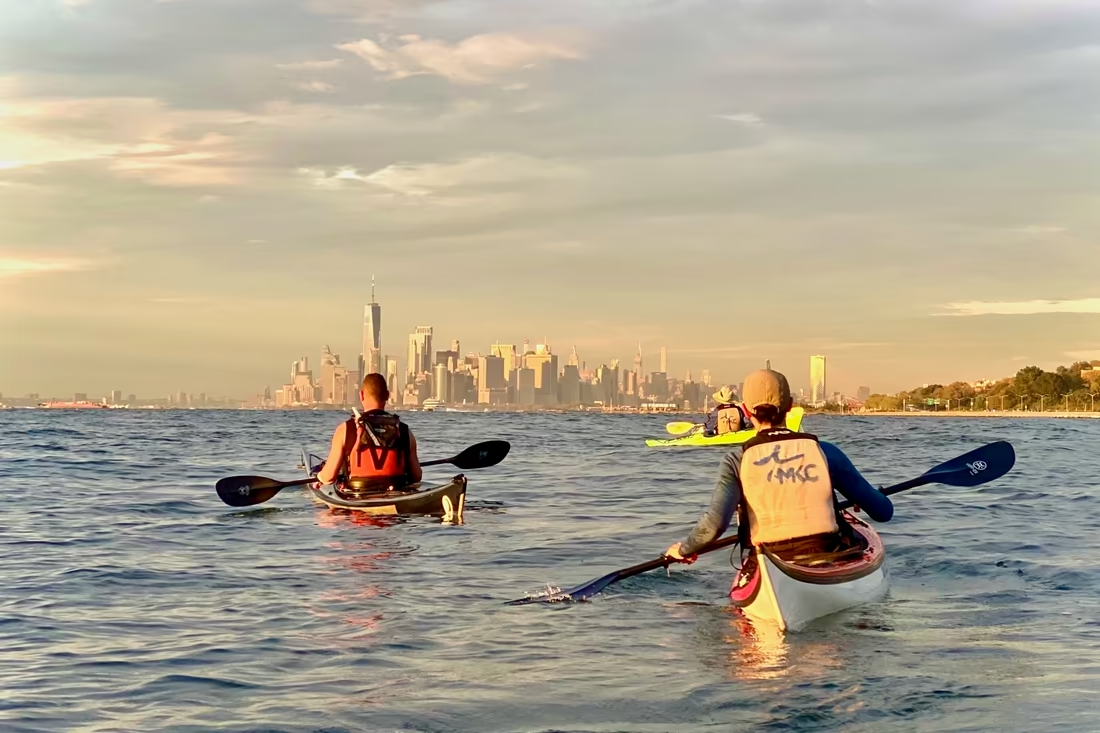
This contrast of plying an ancient waterway, the Hudson River, under one’s own power, past the most dramatic man-made collection of buildings in the world, fosters some real Hiawatha-meets-Ayn Rand moments.
There’s a Catch…
Here’s the rub. For many people, and certainly many urbanites, Flow is a slippery slope. If you’re a quick learner, high achiever, and big goal setter, then you’ll need to have more skills to both enter and stay in the game of Flow. Recreational paddling simply won’t do the trick for you. You’ll find yourself going to another activity like boxing or climbing. Chances are, just as you are getting pretty good at those, you may also get bored: “Been there, done that. Next!” Flow is fleeting and not too deep on this path.
Now I know it’s a tall order to become a master at something and even an expert is a big reach too. However, to learn something deeper than face value, to get to its core, to know its language and then to go further, to make it a permanent part of your muscle memory–is to go past dabbling to become really good at it. Mastery any sport takes time. Then, it’s something you can tap into for your whole life on oceans, rivers, lakes, islands, forests and mountains. This is truly worth giving it “the proper go”, as my friend Peter would say.
It all starts with learning the technique. In paddle sports, the “proper” technique is counter intuitive. It’s rare that you’ll teach yourself the best way to do it by simply getting in a kayak, or on a SUP with a paddle, and going for it. Sure, you may get pretty strong and fit, you may be able to beat the rest of your buddies across the lake every time until one day, somebody half your size with great technique cruises by on a windy day. Ask them if they came from MKC, they likely did.
Good technique is 70% of the game. It easily outweighs strength and endurance. It’s the ultimate game changer when paddling conditions get more challenging and complicated. You’ll achieve it rapidly in the presence of a good instructor who can teach and encourage. A teacher provides basic goals and immediate feedback, yet knows when to let you practice on your own. Just one good lesson can change the paradigm. Then even YouTube videos will make more sense.
Right Here, Right Now!
Manhattan Kayak can get you to your ON Flow button. It starts with good technique and this learning is best not rushed. Let the skills bake in, let the body adapt, then challenge yourself again. Very fit people with a background in paddle sports, surf, or swimming may be able to go a bit faster (i.e. take SUP 1 and 2 on same day).
The third class is your intro to the power of the Hudson River and the Flow Games begin in earnest. Once you’re on your way, then we keep you Flowing with a menu of progressive guided river trips from shorter calmer ones to longer harder ones.
Ready to find your ON button? Our Basics 1-2-3 is the sequence that sneaks you past the fear and into the flow.
Paddling with Others = Group Flow
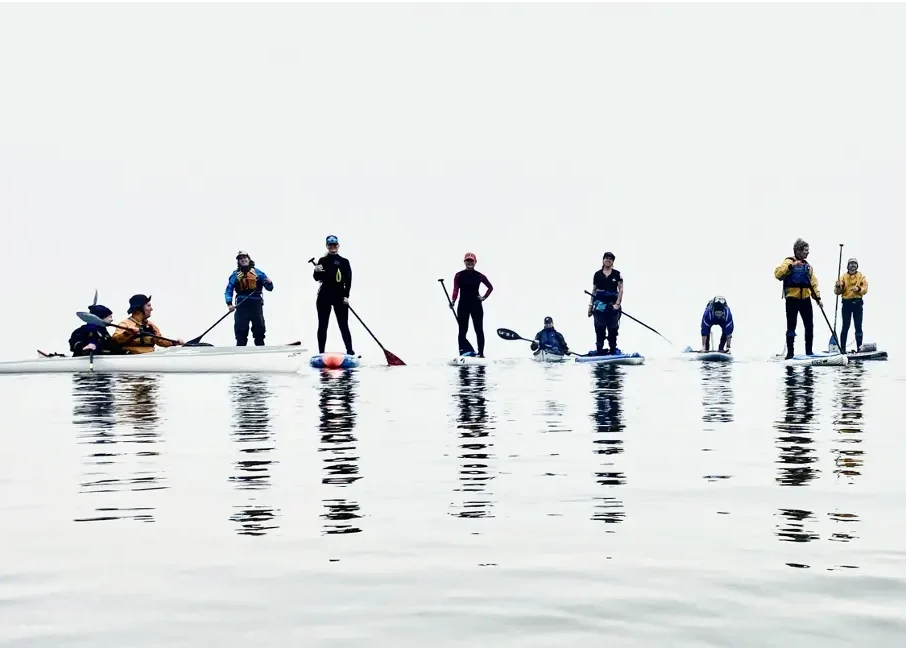
After 30 years of teaching paddlers and then exploring with them far and wide, I wouldn’t change my answer to the question: “Where’s your favorite place to paddle?” The most fun and the most flow comes from being in my boat, or on my board, sharing it with others. In hindsight, this was always the case. It just happens that Flow Science can prove it now.
I cherish the memories of taking my early childhood friends Mark Sevasta and Warren Newman to the Delaware River with my dad. I will never forget the first one-week kayak/camping expedition with my dad at age 12 in the Adirondacks. Then, it was the semi epic one-week dash with my high school and college buddies covering the whole Chesapeake Bay. The term Flow, as applied to positive psychology, was barely born and Dr. Mihaly was just starting to change his diapers.
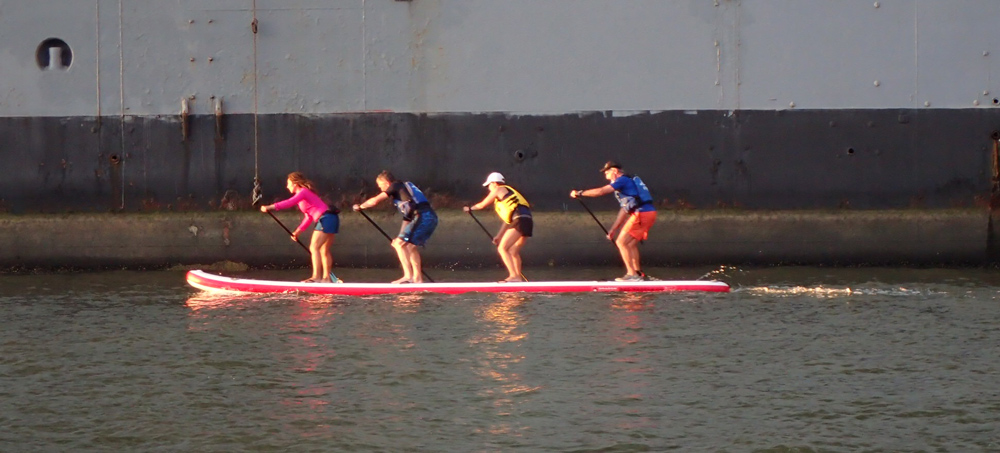
For most of you, you’ill find flow easier with a tribe of similarly-skilled paddlers who can blend their egos harmoniously. Others with higher skills will love (and find flow) teaching family, friends, and colleagues. Universally, it’s optimal when a group of very capable paddlers are applying their skills and teamwork in a challenging, and perhaps risky, environment. This is a full Group Flow dynamic: the adventure, the new environment, the growing friendships!
The Bottom Line
We find that our Statue of Liberty Trip fits the bill for many of our advanced students while the epic Manhattan Circumnavigation never disappoints.
We can use a lot more Flow in our lives and learning how to kayak or SUP well can turn on our Flow more often than not. When combined with the meditative potency of being on the water, plus the cardiovascular strength and benefits of self propulsion, you have a potent combination for health, happiness, and joy.
For those of you who have taken our Basics Classes, please keep your Flow turned ON for whenever and wherever you paddle.