
What to Wear: Dress for the Elements
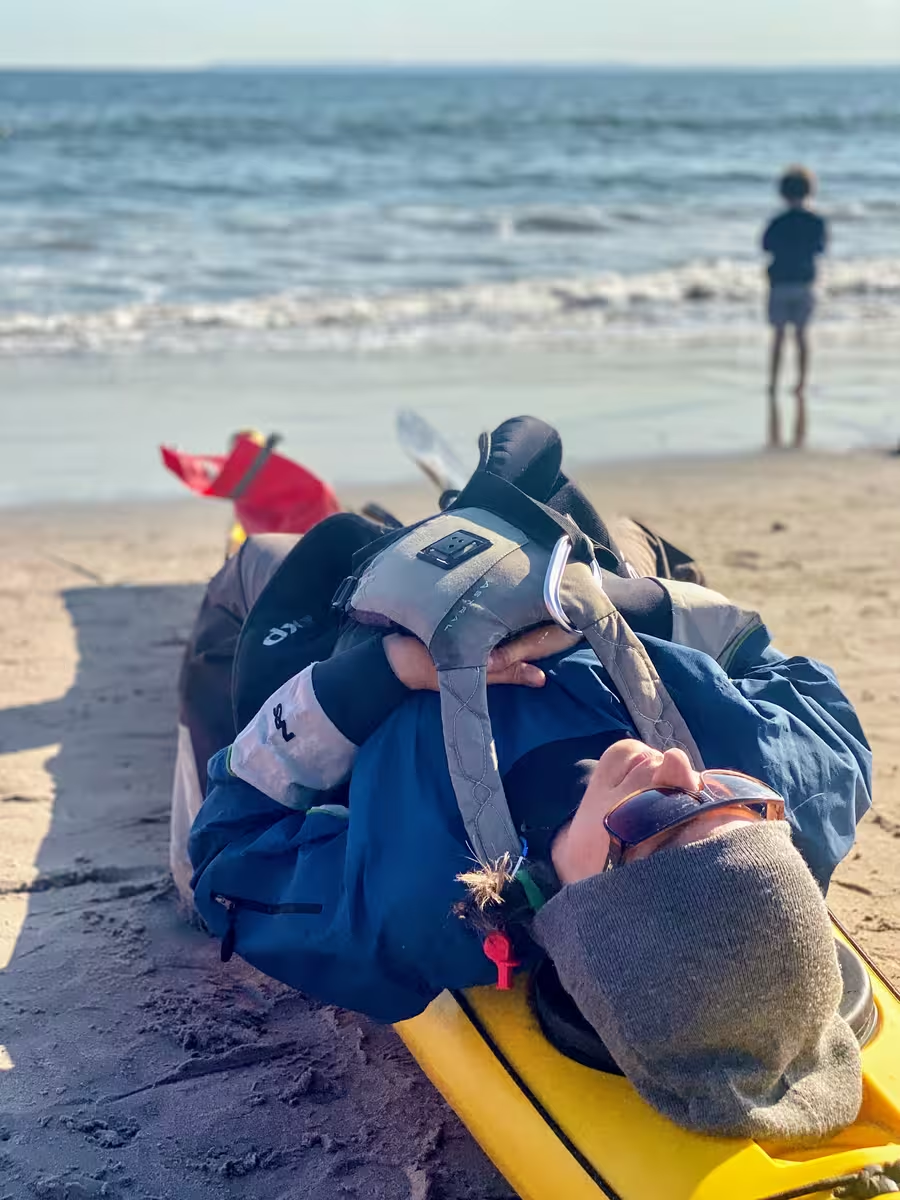
Avoid These.
- Cotton or cotton blends. They’re sticky when wet and dry slowly
- Sneakers that you don’t want to get wet
- Shoes with heels, leather soles, or thongs
- Finery: linen, silk, velvet, leather
- Jewelry that can slip off or snag
.
May 1–October 30: Summer Activewear
Water temps 60–80°F.
- Activewear: Wear what you already own, if possible. Reach for your workout gear—look for labels like polyester or nylon. These fabrics don’t get heavy and soggy like cotton does. If you’re shopping, choose sustainable fabrics like Merino wool, hemp, and recycled polyester.
- Bathing Suit: On hot days, wear a bikini or trunks. Or, wear them under your clothing instead of cotton intimates.
- Snug Hat: Brimmed hat with a chin strap, a snug cap, or a visor. Wind will blow away loose hats.
- Footwear: Sports sandals with a heel strap, water shoes, or old sneakers. They’ll get soaked. Wear ones that never slip off.
- Cold Days: You can borrow our splash jackets or wetsuits on windy or rainy days.
.
Optional Extras
We bring these every trip! But don’t worry if you lack these, you can still get on the water.
- Reusable bottle filled with water. We have a water fountain
- Snacks for an on-water pick-me-up. Choose ones that are pocket-sized and don’t melt or squoosh
- Marine-grade carabiner to secure your bottle or dry bag to your deck line
- 10–20 liter dry bag to hold spare layers, food, and hat
- Sunglasses with a bright floating strap like Croakies
- Waterproof phone case with a lanyard, or rent ours or lock it away
- Reef-safe sunscreen: It’s non-toxic for all marine life. 🌎
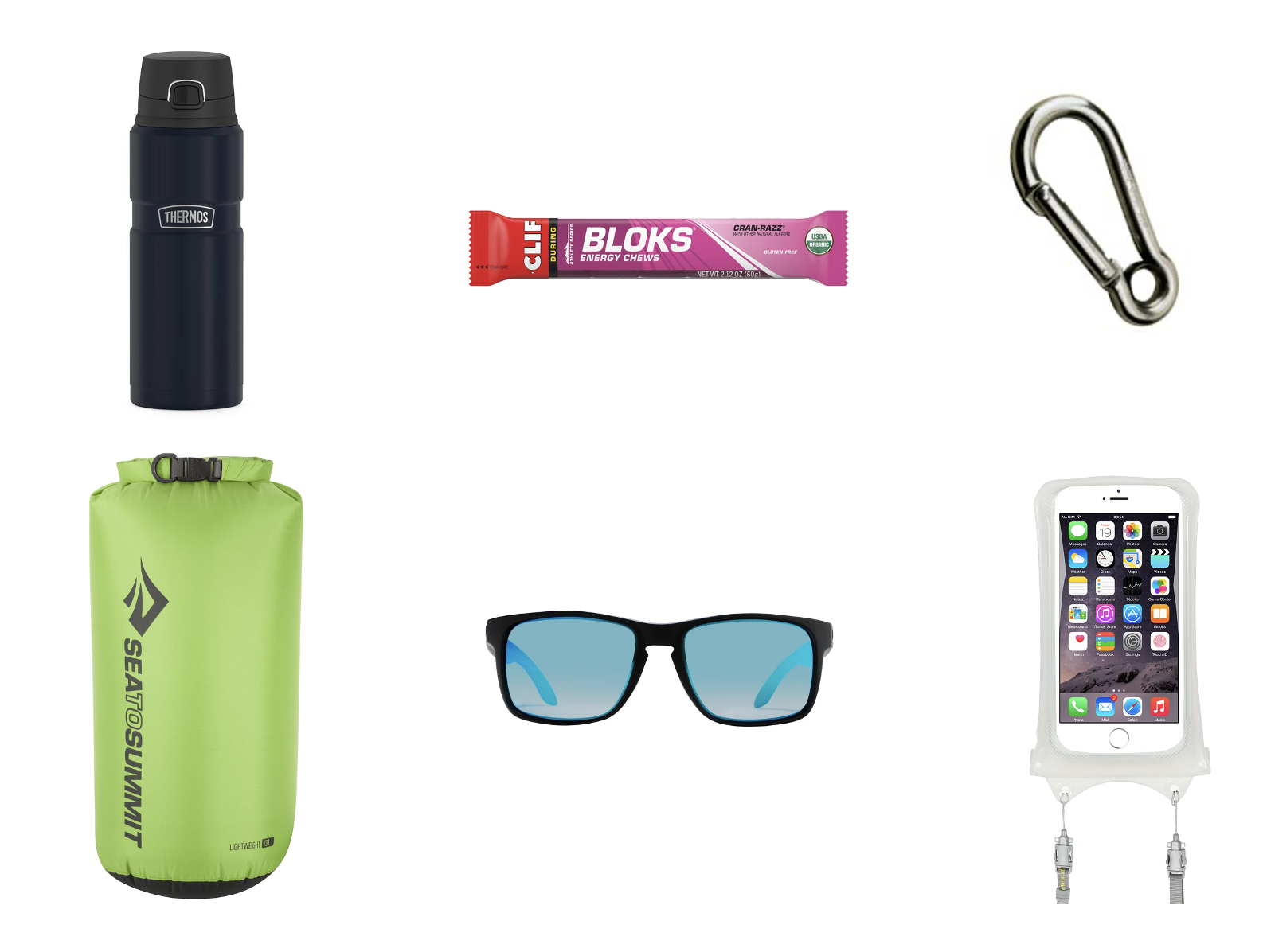
Clockwise from upper left: Thermos 24oz Stainless bottle; Clif Blok chews; Sea Dog 4-3/4” carabiner; AquaVault phone case; Rheos floating sunglasses; Sea to Summit 13L dry bag.
.
November 1–December 20: Wetsuits
Water temps 45–60°F. We outfit you with a wetsuit, splash jacket, and neoprene booties.
For hygiene, wear your own underlayers: non-cotton undies or bathing suit, non-cotton long-sleeve shirt, and socks. A hat or beanie is smart for chilly days. If you bring your own wetsuit, know that thick sleeves restrict shoulder movement…that’s why we prefer sleeveless wetsuits. Is it a hot day or are you doing a quick rental? Wear summer quick-dry clothes.
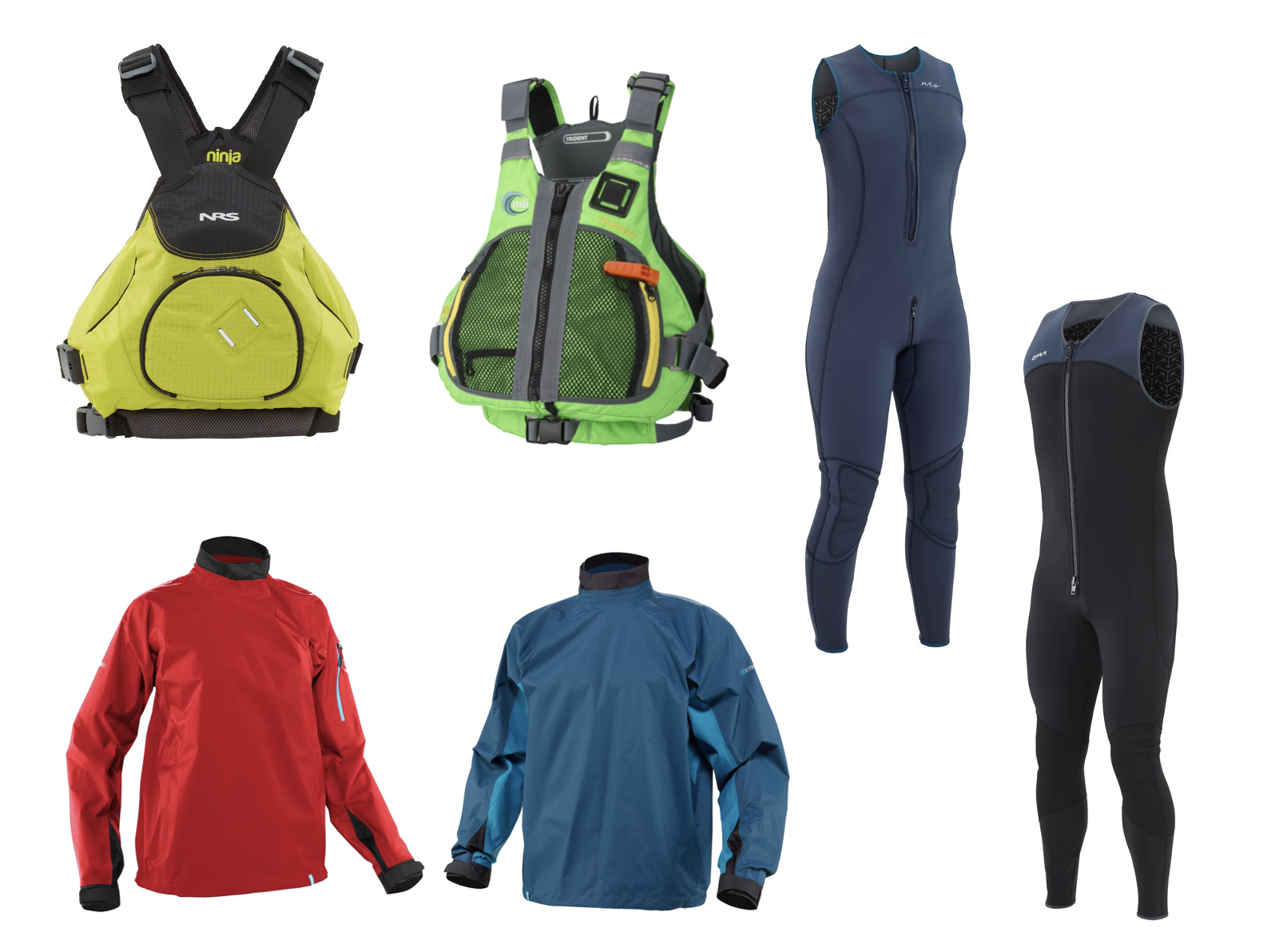
Clockwise from top left: NRS Ninja PFD; MTI Trident PFD; NRS Jane & John 3.0 Ultra wetsuits; NRS Endurance splash jackets.
..
December 21–April 30: Drysuits
Water temps under 45°F. Intermediate+ only. Our winter regulars rely on drysuits to stay 100% dry. These suits use gaskets at the neck, wrists, and ankles to keep the Hudson out. Most paddlers bring their own, but members can borrow from our small pool of donated suits. If you’re buying, look for Kokatat or Stohlquist on eBay; they last for decades.
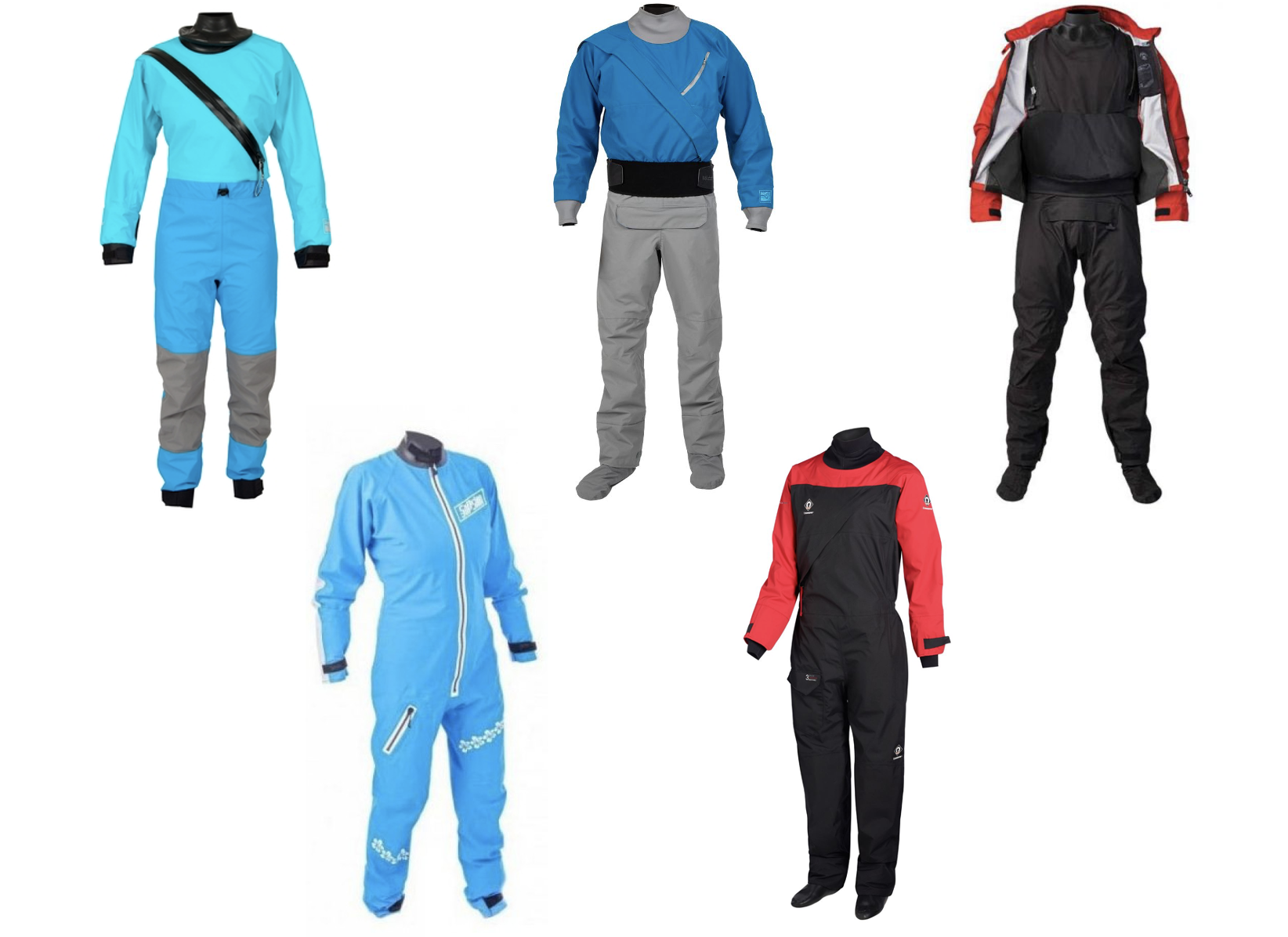
Clockwise from top left: Kokatat Hydrus drysuit; Kokatat Meridian drysuit; Stohlquist Shift drysuit; Crewsaver Atacama drysuit; SUPskin Dynamic drysuit.
Drysuit Underlayers during Winter
Drysuits don’t insulate, so warmth depends on your tops and bottoms underneath. A heavier, airtight suit (like Kokatat) needs only a light base layer, while a thinner suit (like SUPSkin) calls for thick underlayers. Once you find your balance, you’ll be cozy all day. Wool and polyester are best.
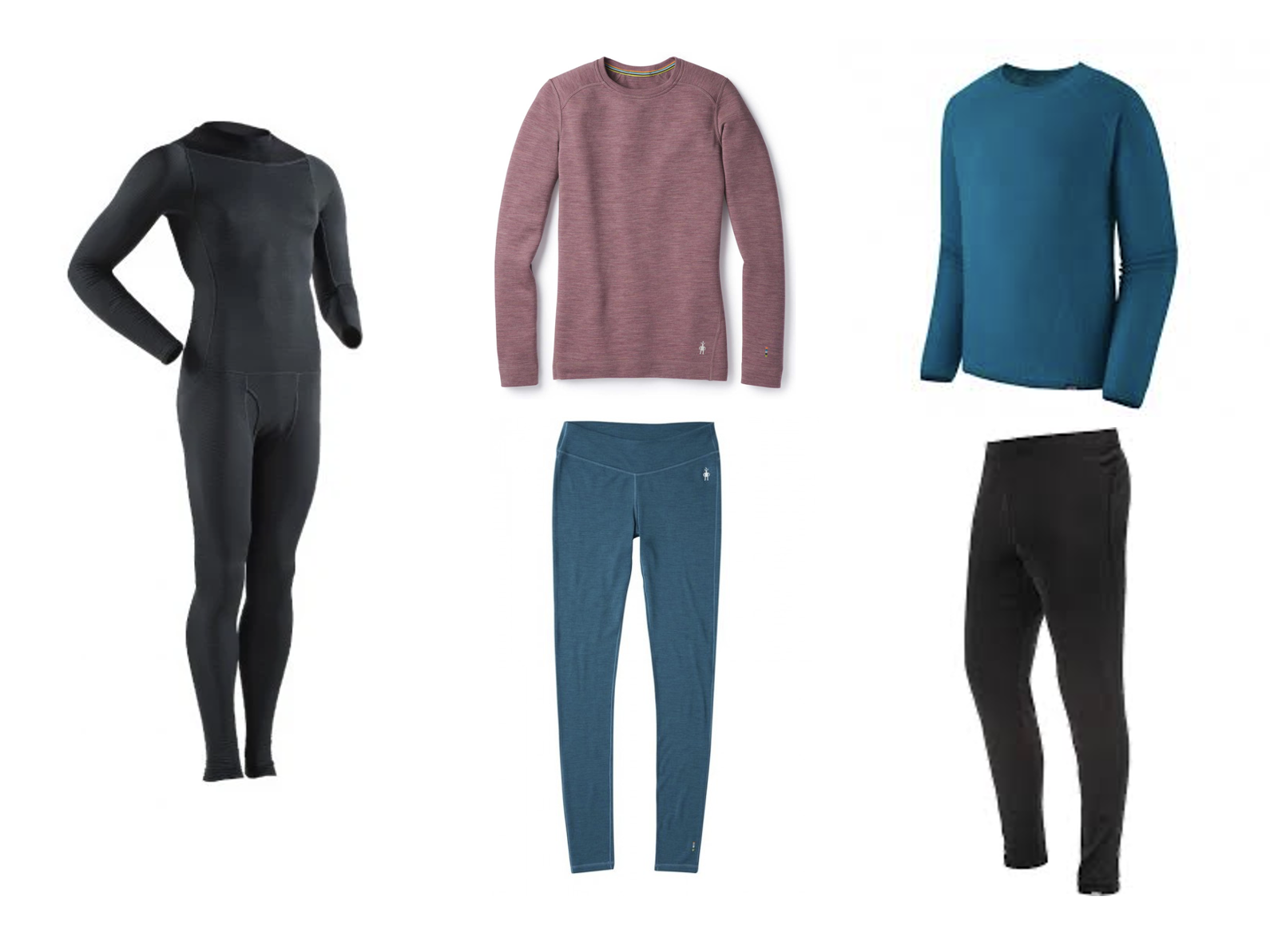
Clockwise from top left: Immersion Research Thick Skin; Smartwool 250 shirt; Patagonia Capilene shirt; Decathlon Simplewarm bottoms; Smartwool 250 bottoms.
.
Accessories
Handwear
For kayakers, pogies are best because they create a warm shell around your hands. They velcro around the paddle shaft and stay attached even if you let go. If you run cold, wear thin neoprene gloves under pogies. Paddleboarders rely on 1.5 mm curved gloves or 3 mm mitts. If gloves are thicker, they need pre-curved fingers like this to avoid hand fatigue.
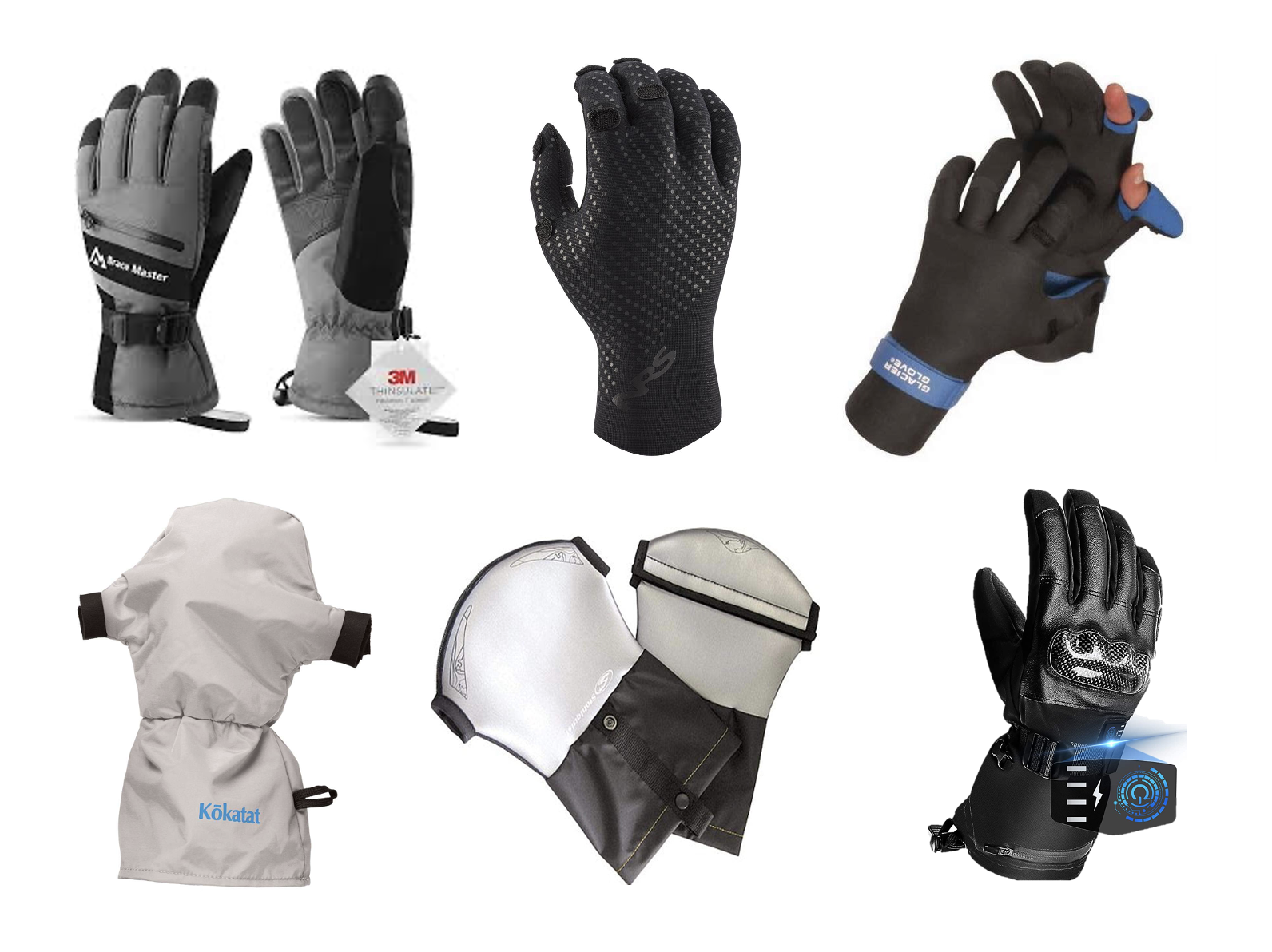
Clockwise from top left: Brace Master ski gloves; NRS HydroSkin 2mm gloves; Glacier Gloves; Shaalek heated gloves; Stohlquist Toaster pogies; Kokatat kayak mitt
.
Footwear
Wool socks keep your toes warm inside neoprene boots (we have lots to borrow). 5 mm thickness recommended, or 7mm if your feet run cold. If you get your own, look for a side zip, so they’re easy to get off. Rinse and air-dry after use. Socks are essential yet bulky, so size up the booties!
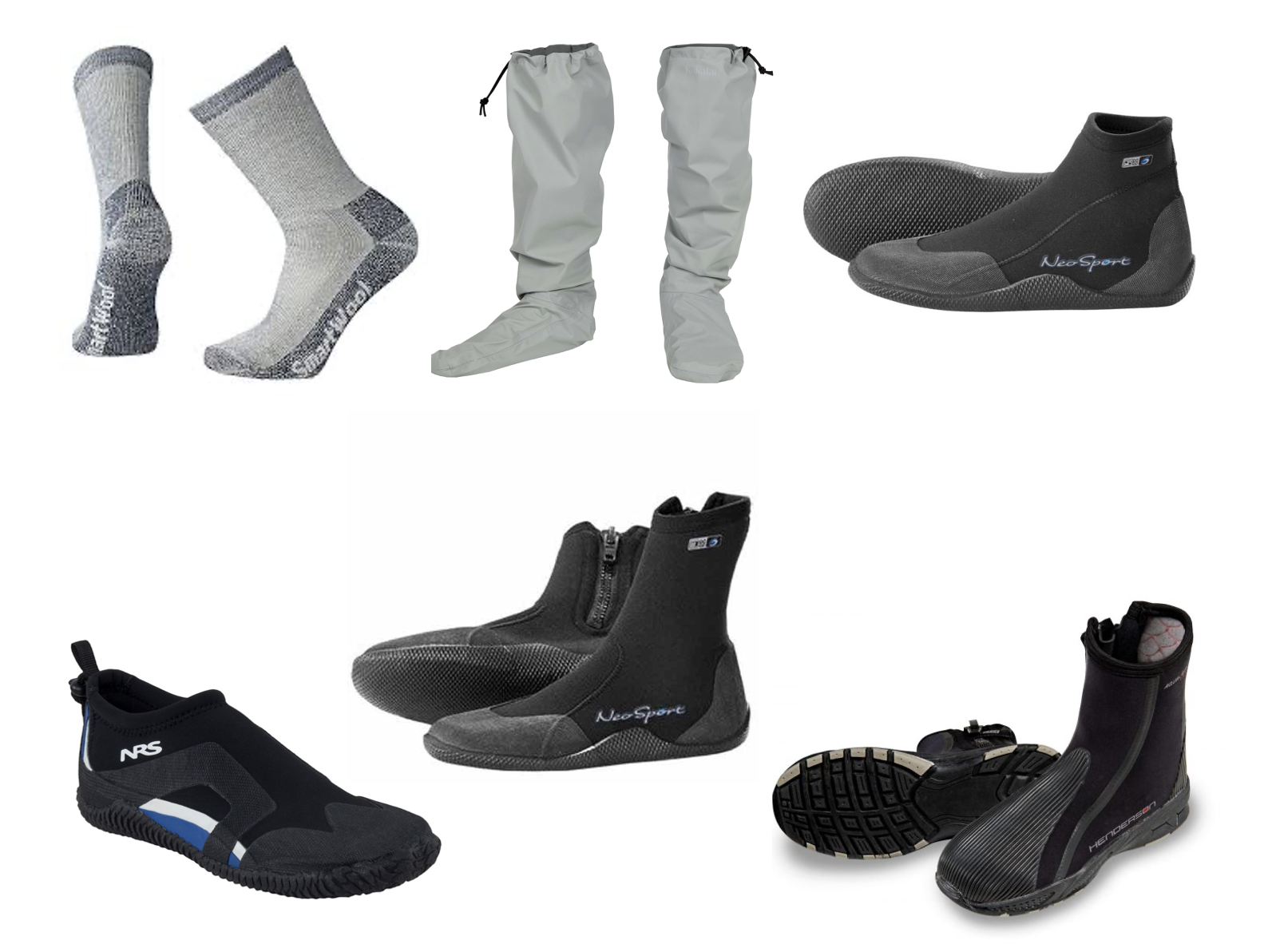
Clockwise from top left: Smartwool socks; Kokatat dry socks; NeoSport 5 mm boots; Henderson Aqua Lock boots; Neosport 7 mm boots; NRS Remix shoes.
.
Headwear
Your head loses heat quickly, so bring a hat even if the day’s warm. A fleece headband or a hat with ear flaps works well, and bright colors help you stay visible on the water. Neoprene caps are excellent for keeping your head warm when wet.
.
Test Ride Your New Clothes & Gear
When you get new gear, test it on a calm, short outing first. That way, if it doesn’t work, you can adjust easily. This is true all year, and crucial for longer trips and colder temperatures. With your outfit and gear just right, the water is blissful.
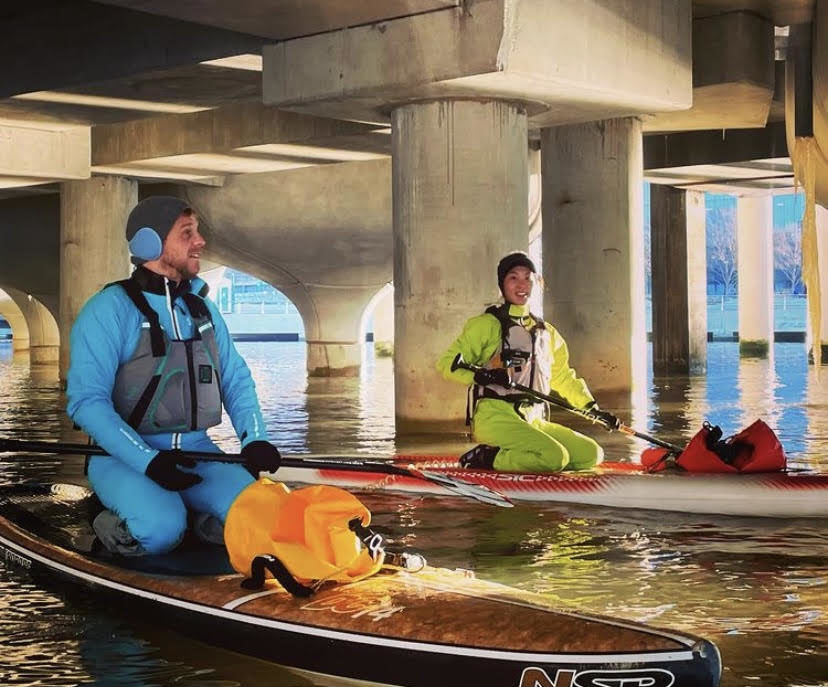
Photo: @161st_and_river